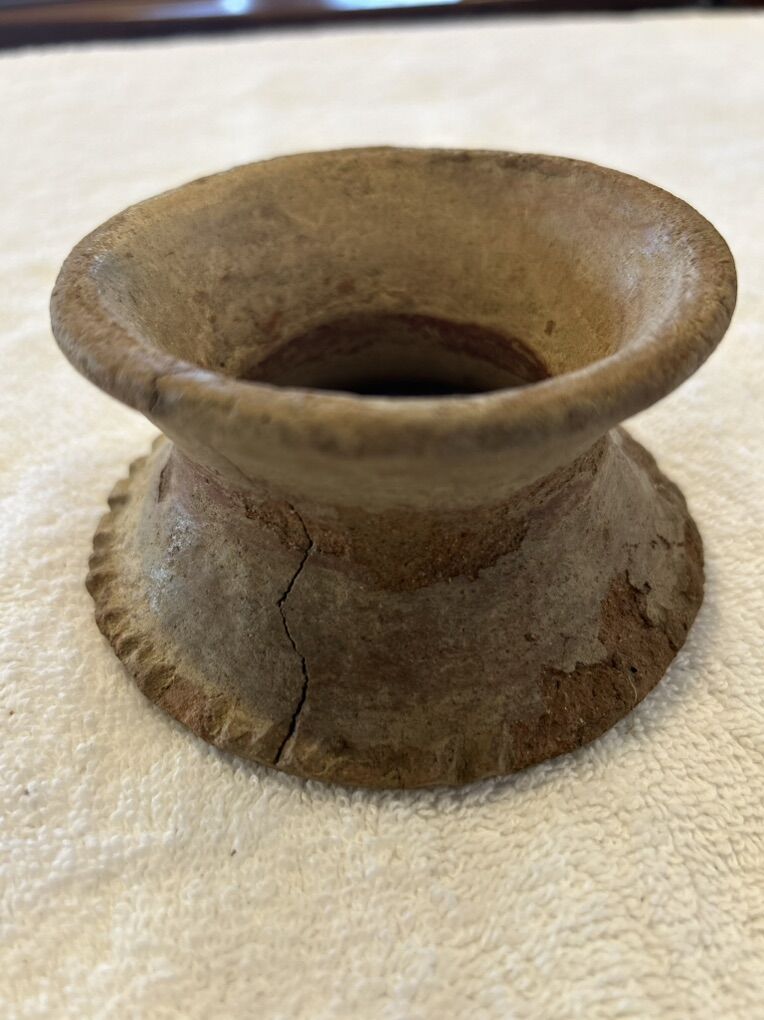
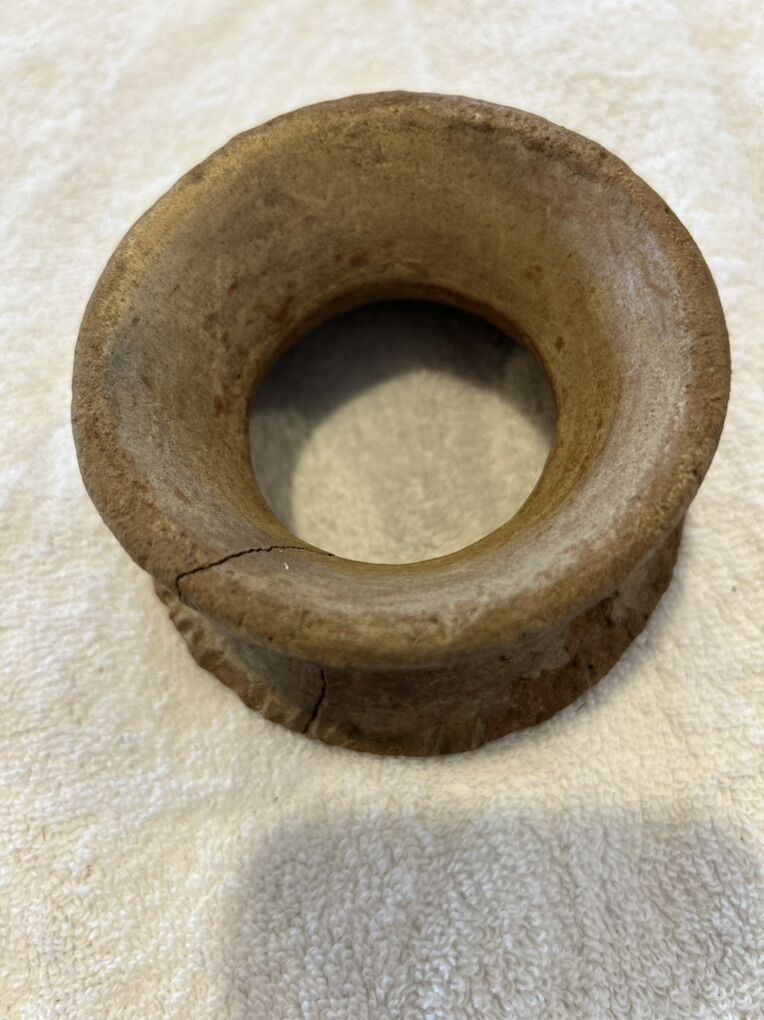
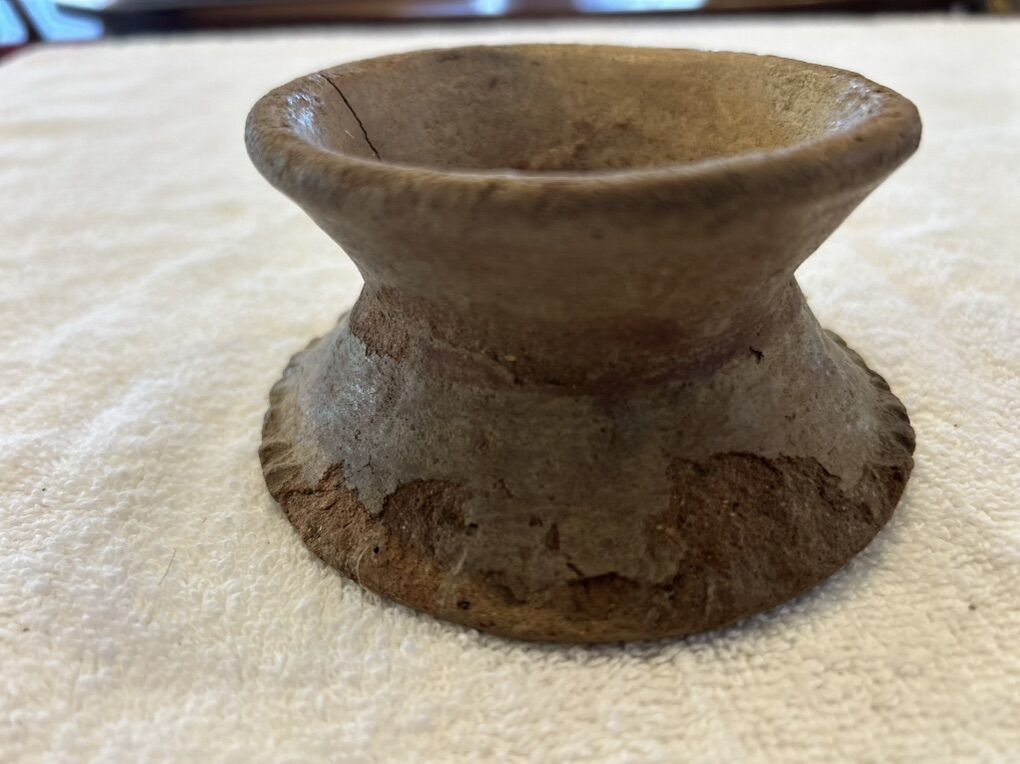
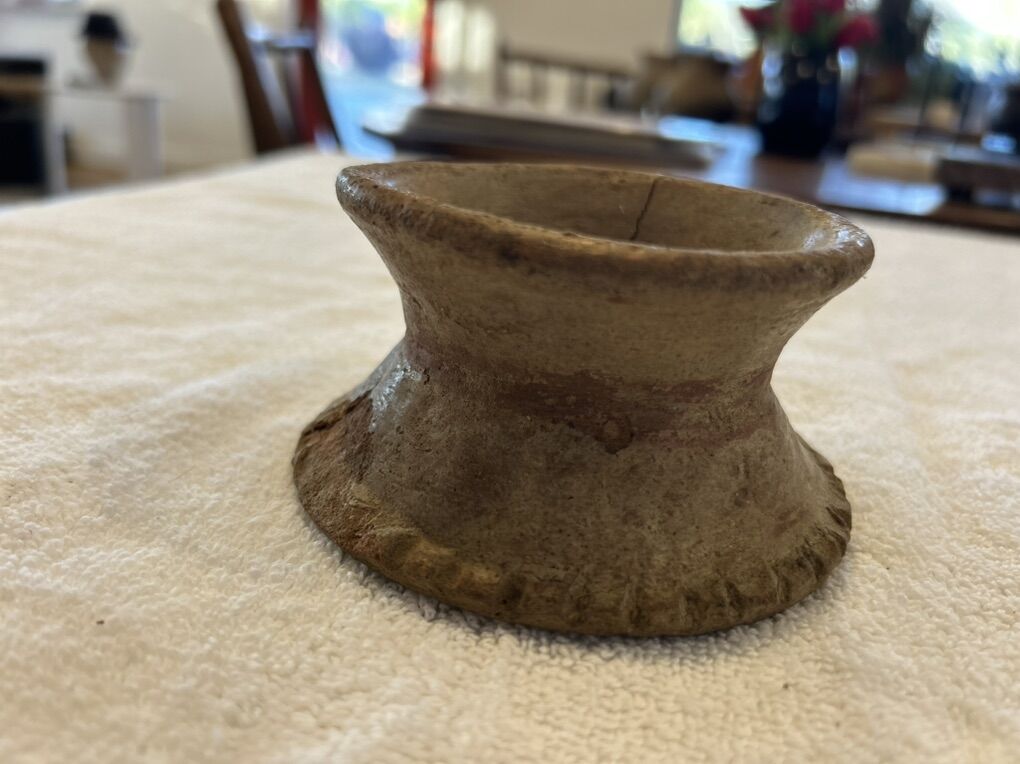
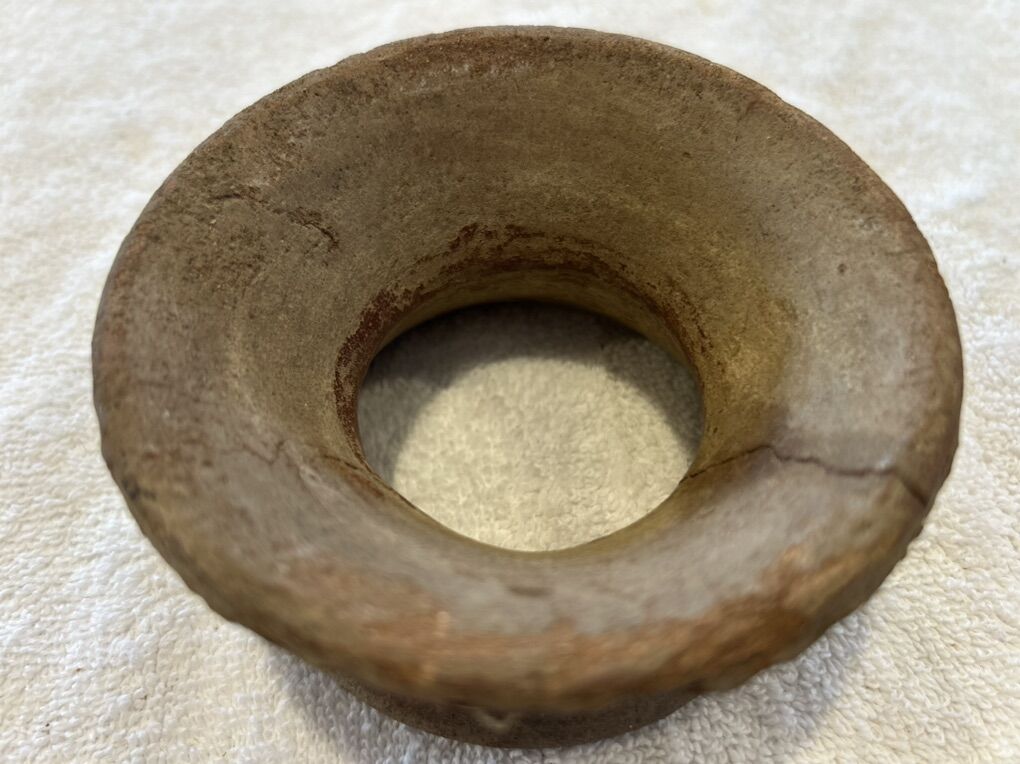
Ancient Native American Earthenware Pottery Lid
11 Days
122
3
$25.00
Description
Condition
Payment Types Accepted
 Venmo
Venmo Zelle
ZelleHere's more information about this type of pottery:
Materials and Construction: This type of pottery was typically crafted from local clays, often hand-formed using methods like coiling (building the pot by stacking and smoothing clay coils) or slab construction.
Tempering materials like sand, crushed rock, shell, or fiber were often added to the clay to improve its workability and prevent cracking during firing.
Purpose: Such pottery served essential daily functions, including cooking, preparing, serving, and storing food and water. In some cultures, larger vessels were also used for burial purposes or ritualistic ceremonies.
Decoration and Styles: Decoration varied widely among different cultures and periods. Techniques included impressing patterns with cords, textiles, or carved paddles, incising designs into the wet clay, or applying slips (liquid clay suspensions) to create colored surfaces or painted designs.
Cultural Significance: Beyond their practical utility, these pots often held significant cultural and artistic value, reflecting the unique traditions, spiritual beliefs, and artistic expressions of the communities that created them.
Historical Context: Examples of ancient pottery provide valuable insights into the daily life, technology, and cultural practices of prehistoric societies across the globe. The discovery and study of such artifacts contribute significantly to our understanding of human history and development.
2.25” height
3.75” diameter
You Might Also Like






Ancient Native American Earthenware Pottery Lid
11 Days
122
3
$25.00
Description
Condition
Payment Types Accepted
VenmoZelleHere's more information about this type of pottery:
Materials and Construction: This type of pottery was typically crafted from local clays, often hand-formed using methods like coiling (building the pot by stacking and smoothing clay coils) or slab construction.
Tempering materials like sand, crushed rock, shell, or fiber were often added to the clay to improve its workability and prevent cracking during firing.
Purpose: Such pottery served essential daily functions, including cooking, preparing, serving, and storing food and water. In some cultures, larger vessels were also used for burial purposes or ritualistic ceremonies.
Decoration and Styles: Decoration varied widely among different cultures and periods. Techniques included impressing patterns with cords, textiles, or carved paddles, incising designs into the wet clay, or applying slips (liquid clay suspensions) to create colored surfaces or painted designs.
Cultural Significance: Beyond their practical utility, these pots often held significant cultural and artistic value, reflecting the unique traditions, spiritual beliefs, and artistic expressions of the communities that created them.
Historical Context: Examples of ancient pottery provide valuable insights into the daily life, technology, and cultural practices of prehistoric societies across the globe. The discovery and study of such artifacts contribute significantly to our understanding of human history and development.
2.25” height
3.75” diameter
You Might Also Like
