
DEFINITIVE TECHNOLOGY DR-7 FLOORSTANDING SPEAKERS
1 Day
433
4
$225.00
Description
Condition
Payment Types Accepted
 Venmo
VenmoNOT TRADING**
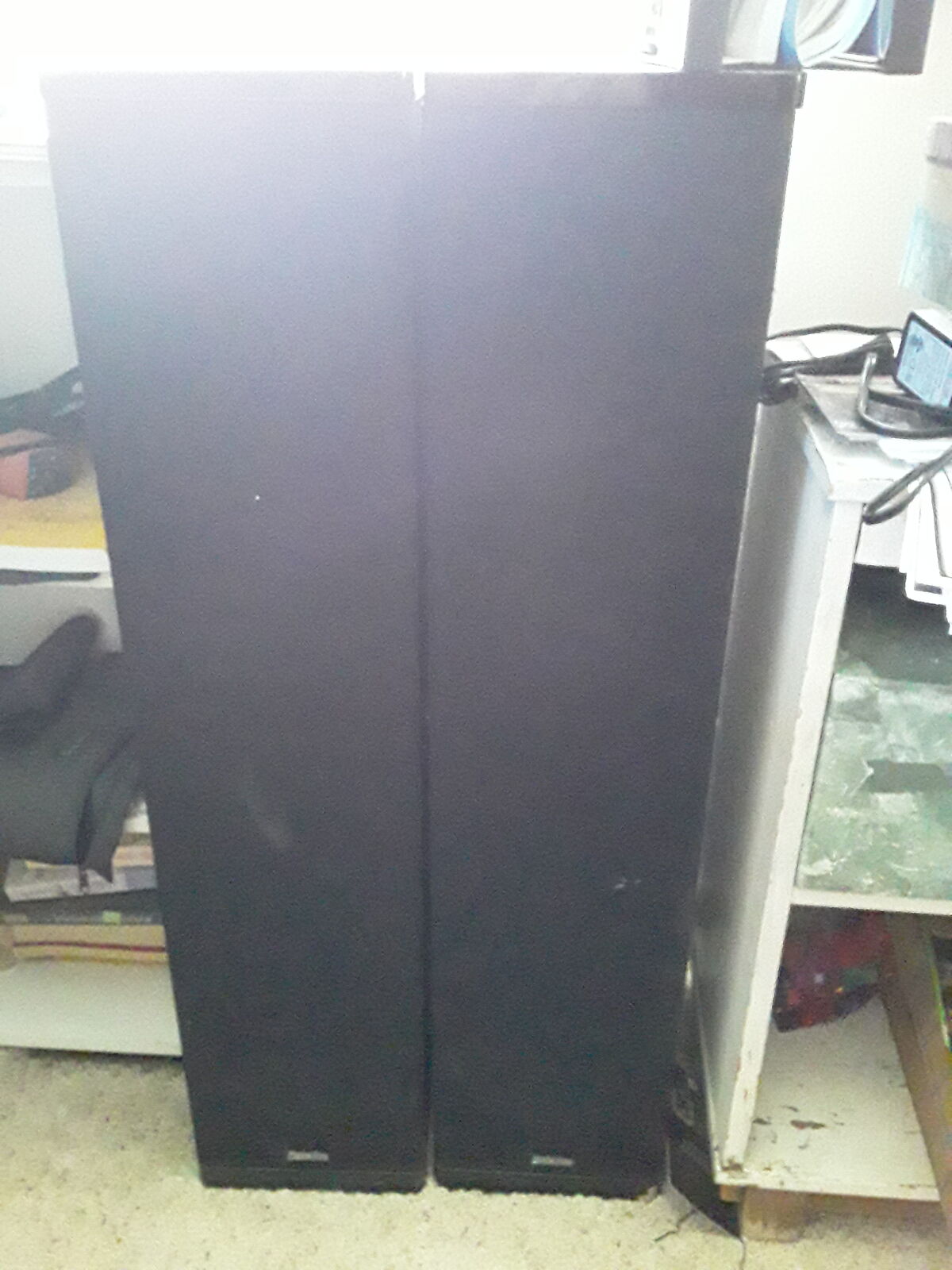
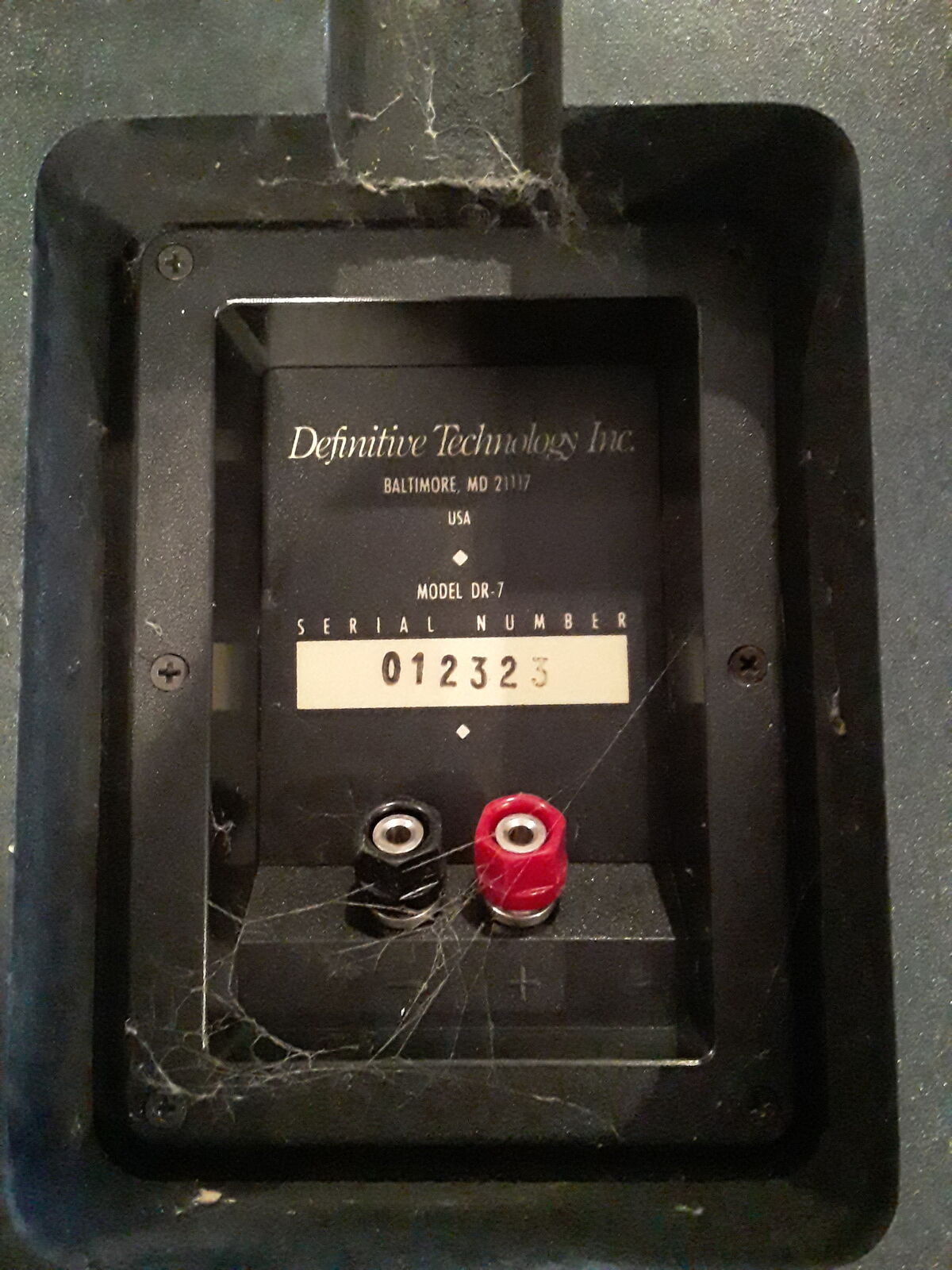
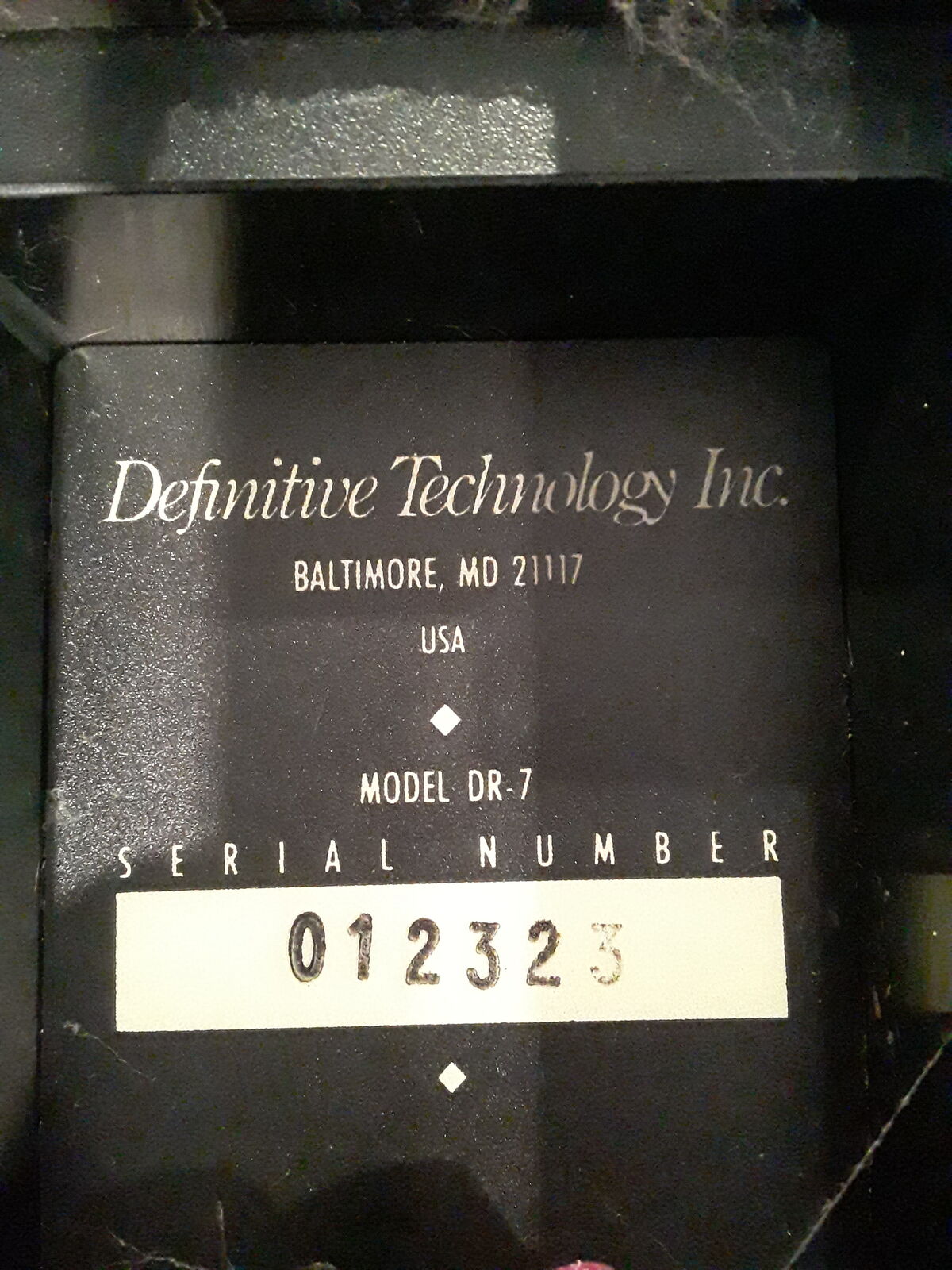
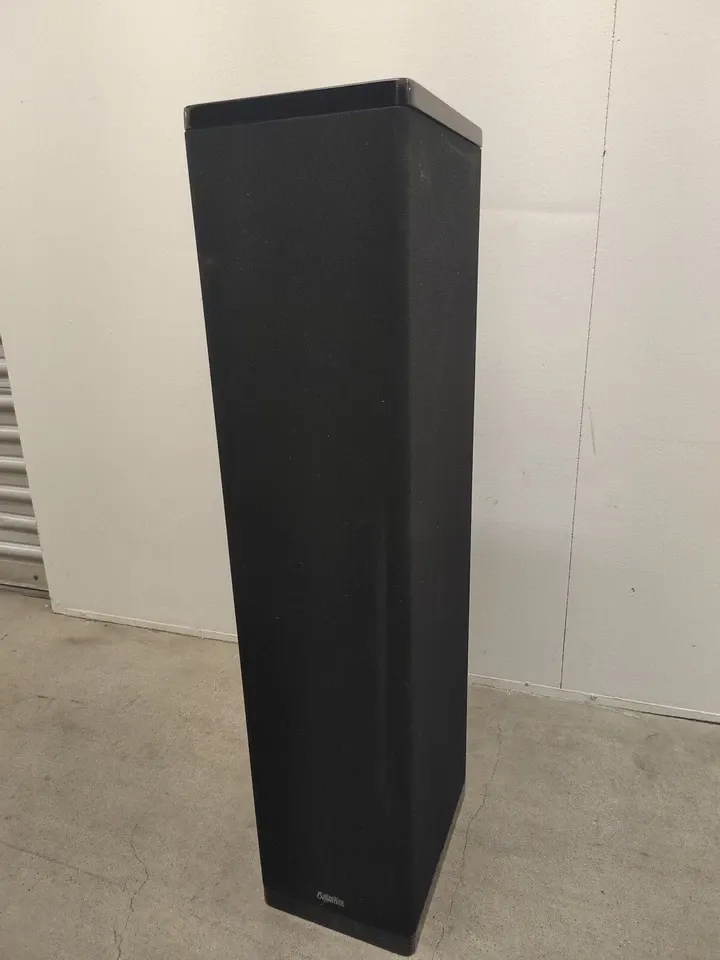
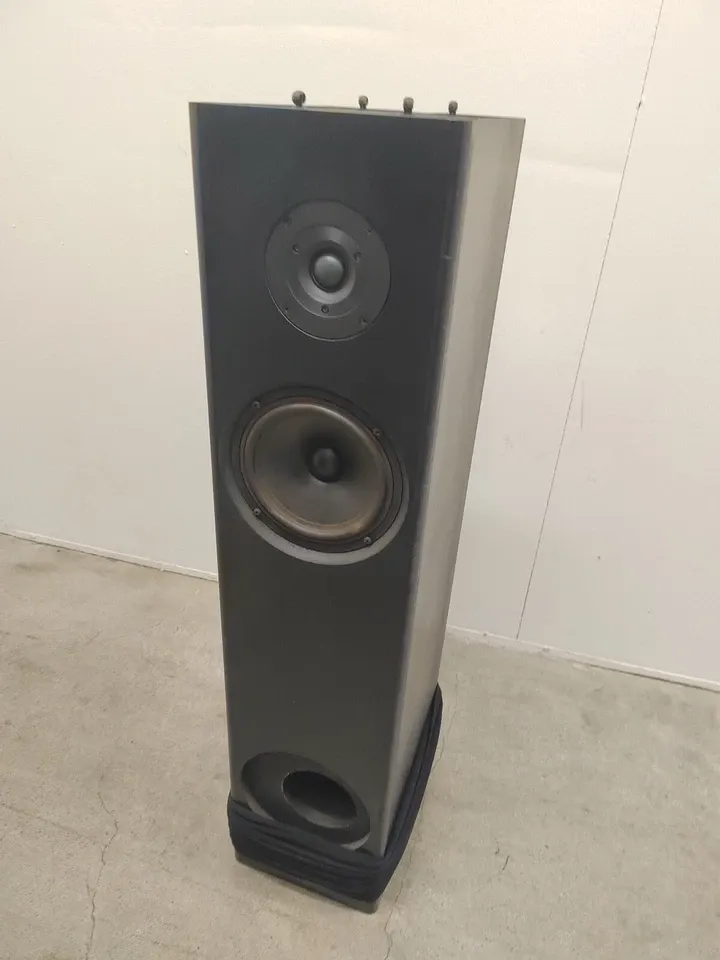
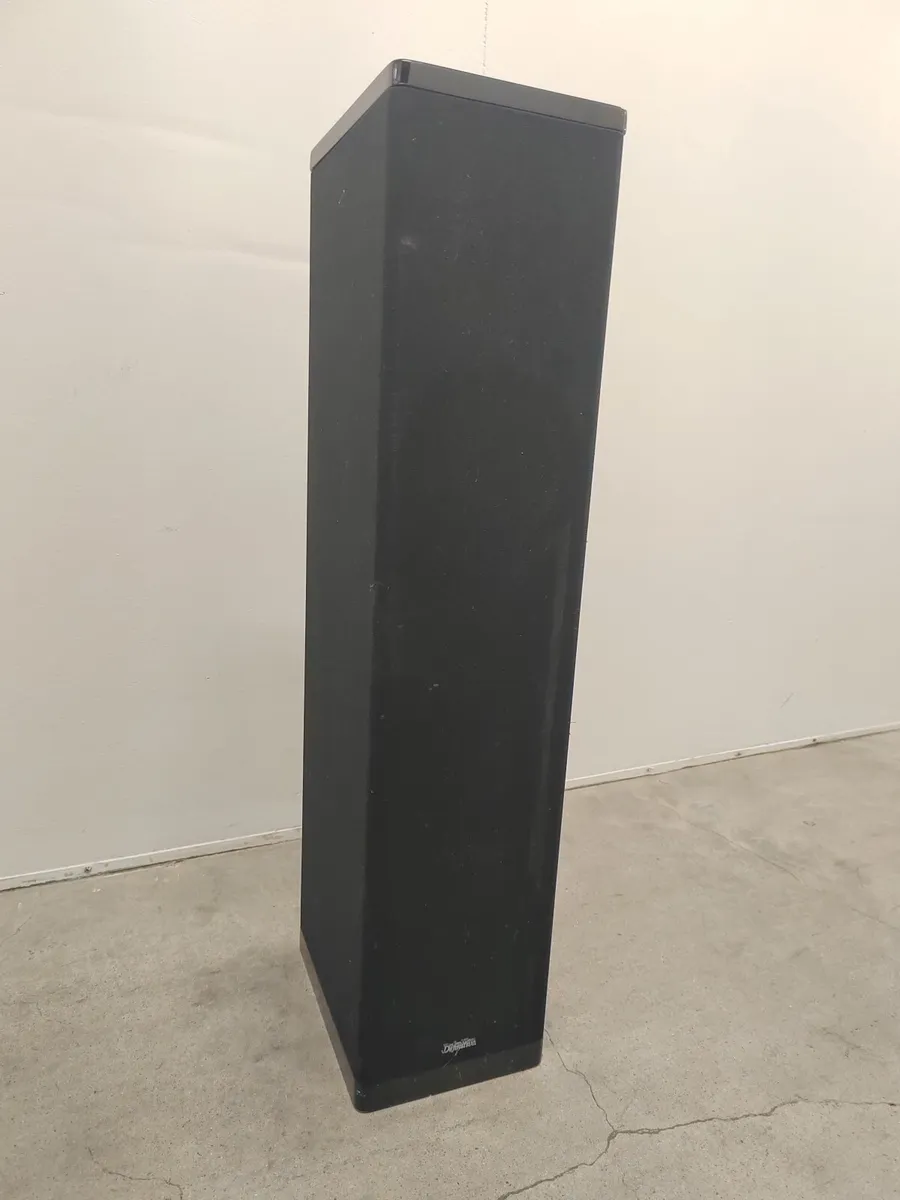
Stored and not used for many years. Our only frontal picture had the sun in the background but mine is the same. First 4 mine. They came in 2 versions. Bookshelf and Tower. Only one on ebay that is not a local pickup is $500 or you are welcome to drive to California or Canada.
Tech stuff
The DR7 is a slender, columnshaped speaker that measures 38 inches high, 11-1/2 inches deep, and 8-1/2 inches wide. Like the BP10 and BP20, it is covered on four sides by a snugly fitting black cloth sleeve. The visible portions of the wooden base and the removable wooden top are finished in glossy black piano lacquer or golden oak. The input terminals-multiway binding posts that also accept single or double banana plugs-are on the bottom of the cabinet, whose base is slotted to clear the connecting cable.
The DR7 is a two-way vented system with a 6-inch woofer, a 1-inch ferrofluid-cooled tweeter, and a phase-coherent Linkwitz-Riley crossover network. The woofer is a little above the center of the front panel, the tweeter near the top, and the woofer port near the bottom. The manufacturer describes the system as having "computer-synthesized transmission-line tuning" for extended bass response. Its internally braced cabinet has special foam damping pads and 1-inch-thick Medite front and rear panels with rounded corners. In combination with the flush-mounted drivers and frameless "sock" grille, these features minimize cabinet resonances and diffraction.
The woofer is constructed with a cast-magnesium basket designed to have the largest possible open area behind the cone. Its butyl-rubber surround and dust cap are said to combine durability with a very low free-air resonance, a long maximum cone excursion, and effective damping of midrange energy in the cone.
The Definitive Technology DR7's specifications include a bandwidth of 22 to 28,000 Hz, a sensitivity of 90 dB, and a nominal impedance of 6 ohms. It is recommended for use with amplifiers rated between 20 and 200 watts per channel. Price: $750 a pair.
Lab Tests
The DR7's room response was exceptionally flat, varying only ±5 dB from 60 to 20,000 Hz before any corrections were applied. A close-miked woofer response, combined with the port output, varied only ±4 dB from 30 to 2,000 Hz and overlapped the room curve for more than two octaves to create a composite response curve flat within ±3 dB from 32 to 20,000 Hz. A separate response curve with the microphone 1 meter from the speaker, using a swept one-third-octave random-noise test signal, gave similar overall results, although many of the variations in output across the spectrum did not coincide with those in the composite curve.
We also took advantage of a new software release from Audio Precision to make quasi-anechoic response measurements with its MLS (maximum-length sequence) digital test program. Over portions of the frequency range where both test methods (swept and MLS) were valid, there was a rough agreement between them, but we will have to acquire more experience with MLS measurements to establish a meaningful correlation between them and the other types we use.
The DR7's measured sensitivity was 90 dB, exactly as rated. Total harmonic distortion plus noise (THD + N) from the woofer with a 2.83-volt constant input was between 0.5 and 1 percent from 80 to 2,000 Hz, increasing to 2.9 percent at 70 Hz, 3.5 percent at 38 Hz, and 10 percent at 25 Hz. The system impedance was a minimum of 3.75 ohms at 150 Hz, with peaks of 11 to 12 ohms at 62 and 25 Hz and 18 ohms at 1,400 Hz. Although the DR7's overall 6-ohm rating is not unreasonable, as its impedance was greater than 6 ohms over most of the audio range, users should be aware that the impedance does drop below that value in a range where considerable program power may be required.
We were not able to identify the exact crossover frequency, which was not given in the product specifications, from any of our measurements or from listening. Definitive Technology's claim of "seamless" response appears to be justified. Our best guess is that the crossover is in the vicinity of 2,000 Hz.
The tweeter's high-frequency dispersion was typical of 1-inch domes, with less than 3 dB difference between the output on-axis and 45 degrees off-axis up to about 6,000 Hz. The difference increased to 8 dB at 10,000 Hz and 14 dB at 20,000 Hz. Group delay varied less than ±0.1 millisecond from 3,000 to 18,000 Hz, with much larger swings from 3,000 to 1,000 Hz.
The DR7, despite its relatively small drivers, was able to handle very high short-term power levels. At 100 Hz, it required a 1-cycle burst of 1,260 watts into the speaker's 4.8-ohm impedance to give positive audible evidence of excessive woofer-cone movement, although some distortion could be heard at somewhat lower power levels. At frequencies of 1,000 and 10,000 Hz, where the speaker's impedance was in the 8- to 15-ohm range, our amplifier clipped first, at 460 and 750 watts, respectively.
You Might Also Like







DEFINITIVE TECHNOLOGY DR-7 FLOORSTANDING SPEAKERS
1 Day
433
4
$225.00
Description
Condition
Payment Types Accepted
VenmoNOT TRADING**
Stored and not used for many years. Our only frontal picture had the sun in the background but mine is the same. First 4 mine. They came in 2 versions. Bookshelf and Tower. Only one on ebay that is not a local pickup is $500 or you are welcome to drive to California or Canada.
Tech stuff
The DR7 is a slender, columnshaped speaker that measures 38 inches high, 11-1/2 inches deep, and 8-1/2 inches wide. Like the BP10 and BP20, it is covered on four sides by a snugly fitting black cloth sleeve. The visible portions of the wooden base and the removable wooden top are finished in glossy black piano lacquer or golden oak. The input terminals-multiway binding posts that also accept single or double banana plugs-are on the bottom of the cabinet, whose base is slotted to clear the connecting cable.
The DR7 is a two-way vented system with a 6-inch woofer, a 1-inch ferrofluid-cooled tweeter, and a phase-coherent Linkwitz-Riley crossover network. The woofer is a little above the center of the front panel, the tweeter near the top, and the woofer port near the bottom. The manufacturer describes the system as having "computer-synthesized transmission-line tuning" for extended bass response. Its internally braced cabinet has special foam damping pads and 1-inch-thick Medite front and rear panels with rounded corners. In combination with the flush-mounted drivers and frameless "sock" grille, these features minimize cabinet resonances and diffraction.
The woofer is constructed with a cast-magnesium basket designed to have the largest possible open area behind the cone. Its butyl-rubber surround and dust cap are said to combine durability with a very low free-air resonance, a long maximum cone excursion, and effective damping of midrange energy in the cone.
The Definitive Technology DR7's specifications include a bandwidth of 22 to 28,000 Hz, a sensitivity of 90 dB, and a nominal impedance of 6 ohms. It is recommended for use with amplifiers rated between 20 and 200 watts per channel. Price: $750 a pair.
Lab Tests
The DR7's room response was exceptionally flat, varying only ±5 dB from 60 to 20,000 Hz before any corrections were applied. A close-miked woofer response, combined with the port output, varied only ±4 dB from 30 to 2,000 Hz and overlapped the room curve for more than two octaves to create a composite response curve flat within ±3 dB from 32 to 20,000 Hz. A separate response curve with the microphone 1 meter from the speaker, using a swept one-third-octave random-noise test signal, gave similar overall results, although many of the variations in output across the spectrum did not coincide with those in the composite curve.
We also took advantage of a new software release from Audio Precision to make quasi-anechoic response measurements with its MLS (maximum-length sequence) digital test program. Over portions of the frequency range where both test methods (swept and MLS) were valid, there was a rough agreement between them, but we will have to acquire more experience with MLS measurements to establish a meaningful correlation between them and the other types we use.
The DR7's measured sensitivity was 90 dB, exactly as rated. Total harmonic distortion plus noise (THD + N) from the woofer with a 2.83-volt constant input was between 0.5 and 1 percent from 80 to 2,000 Hz, increasing to 2.9 percent at 70 Hz, 3.5 percent at 38 Hz, and 10 percent at 25 Hz. The system impedance was a minimum of 3.75 ohms at 150 Hz, with peaks of 11 to 12 ohms at 62 and 25 Hz and 18 ohms at 1,400 Hz. Although the DR7's overall 6-ohm rating is not unreasonable, as its impedance was greater than 6 ohms over most of the audio range, users should be aware that the impedance does drop below that value in a range where considerable program power may be required.
We were not able to identify the exact crossover frequency, which was not given in the product specifications, from any of our measurements or from listening. Definitive Technology's claim of "seamless" response appears to be justified. Our best guess is that the crossover is in the vicinity of 2,000 Hz.
The tweeter's high-frequency dispersion was typical of 1-inch domes, with less than 3 dB difference between the output on-axis and 45 degrees off-axis up to about 6,000 Hz. The difference increased to 8 dB at 10,000 Hz and 14 dB at 20,000 Hz. Group delay varied less than ±0.1 millisecond from 3,000 to 18,000 Hz, with much larger swings from 3,000 to 1,000 Hz.
The DR7, despite its relatively small drivers, was able to handle very high short-term power levels. At 100 Hz, it required a 1-cycle burst of 1,260 watts into the speaker's 4.8-ohm impedance to give positive audible evidence of excessive woofer-cone movement, although some distortion could be heard at somewhat lower power levels. At frequencies of 1,000 and 10,000 Hz, where the speaker's impedance was in the 8- to 15-ohm range, our amplifier clipped first, at 460 and 750 watts, respectively.
You Might Also Like

