

3 Days
13
0
$50.00
Note: KSL, its service providers, and the seller receive data from this message. See our Privacy Notice and TOU for details.
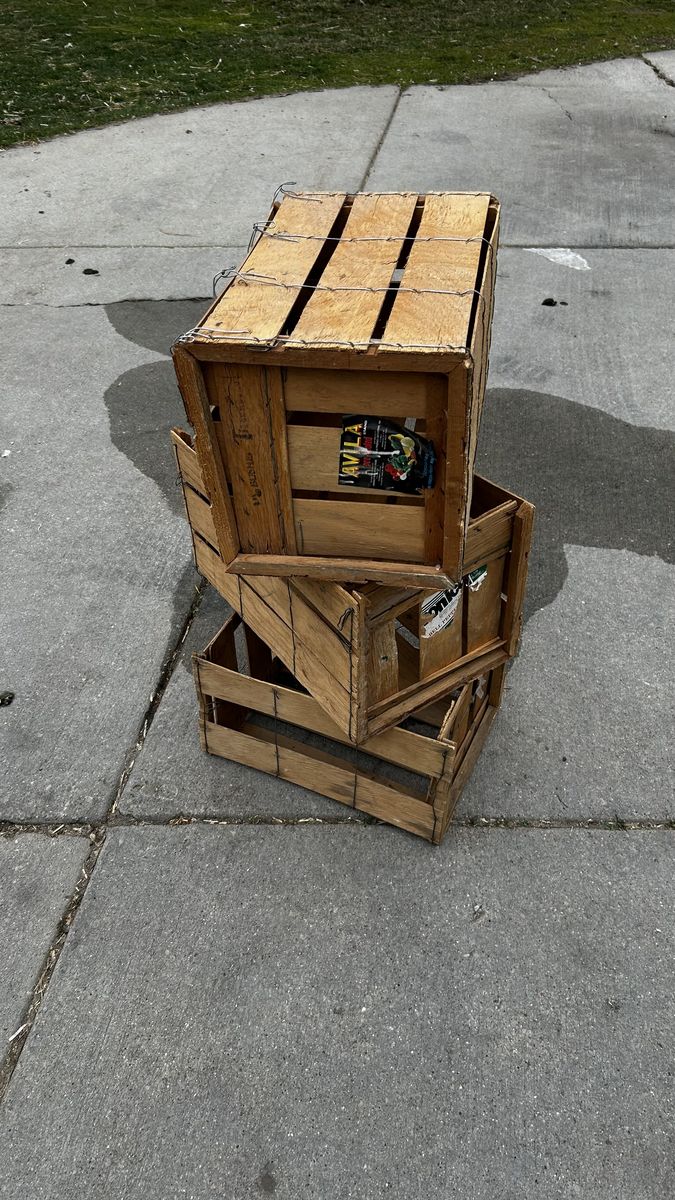
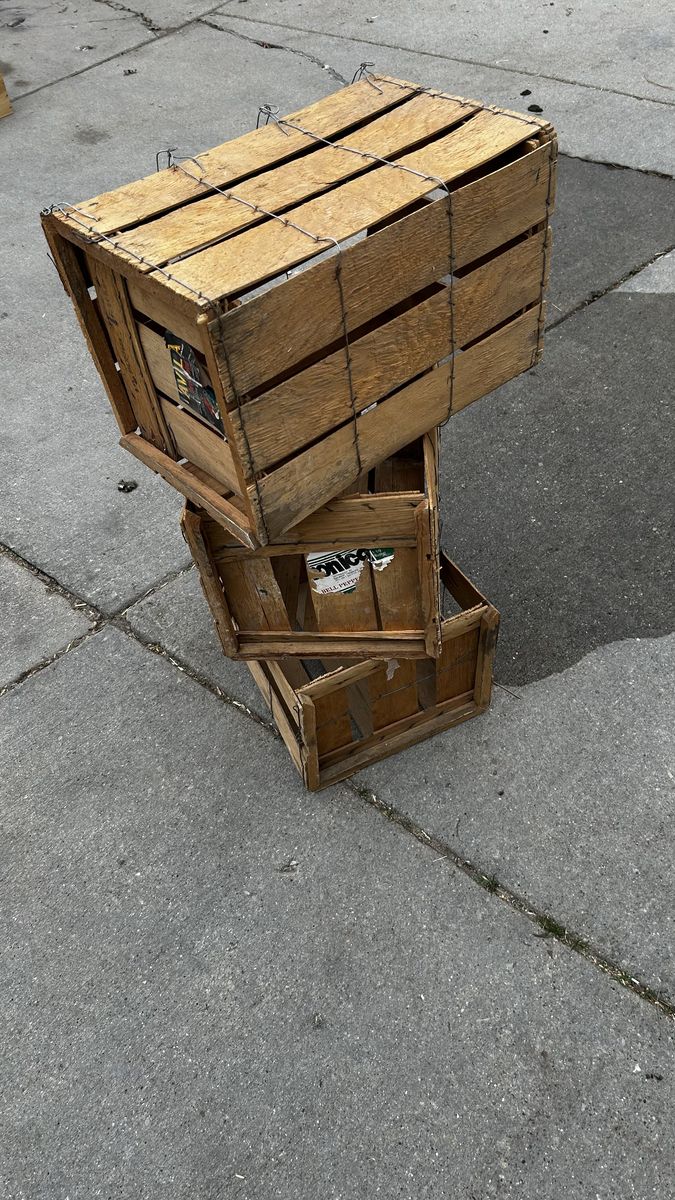
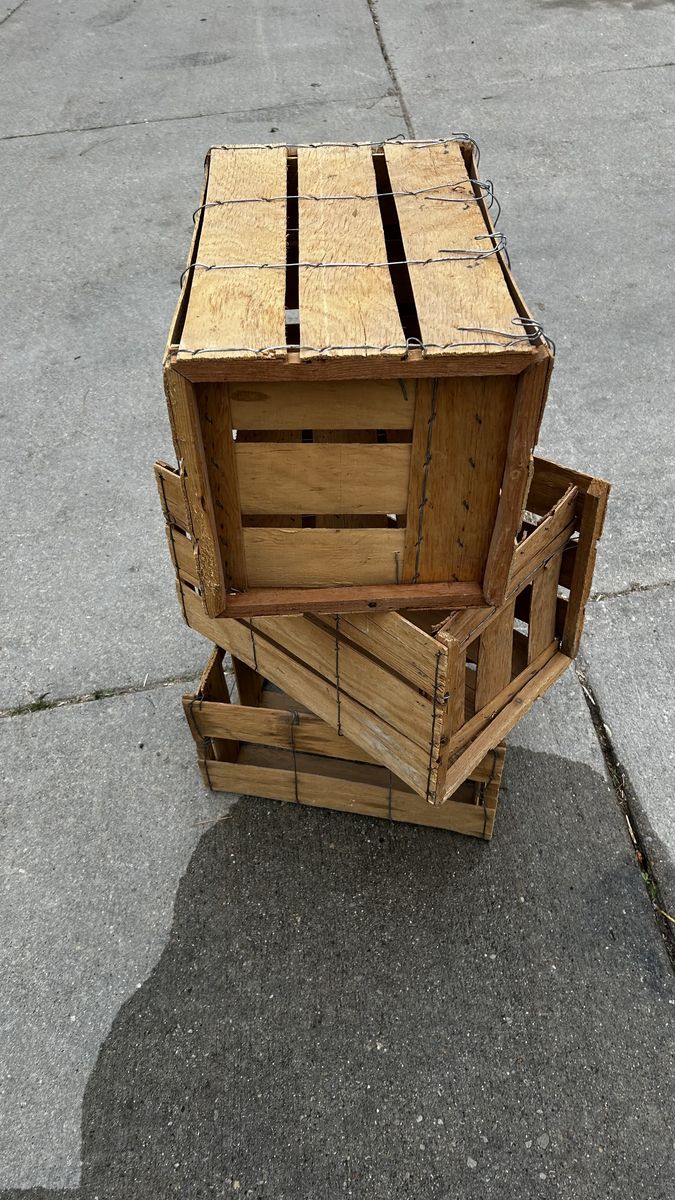
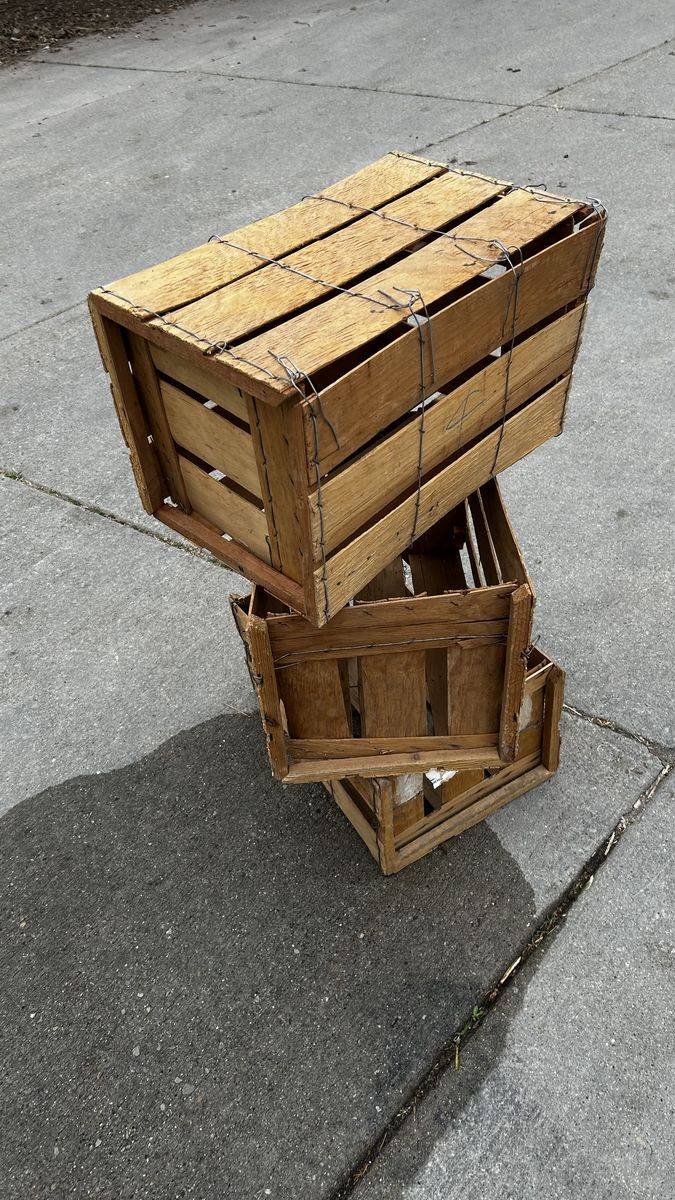
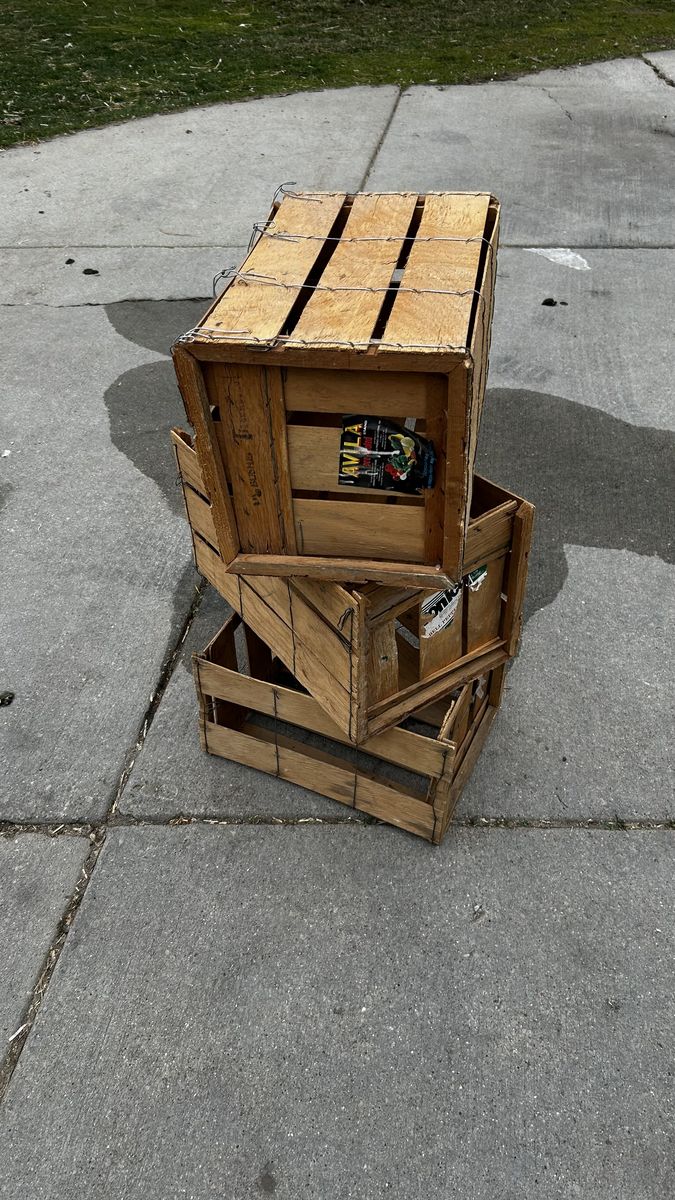
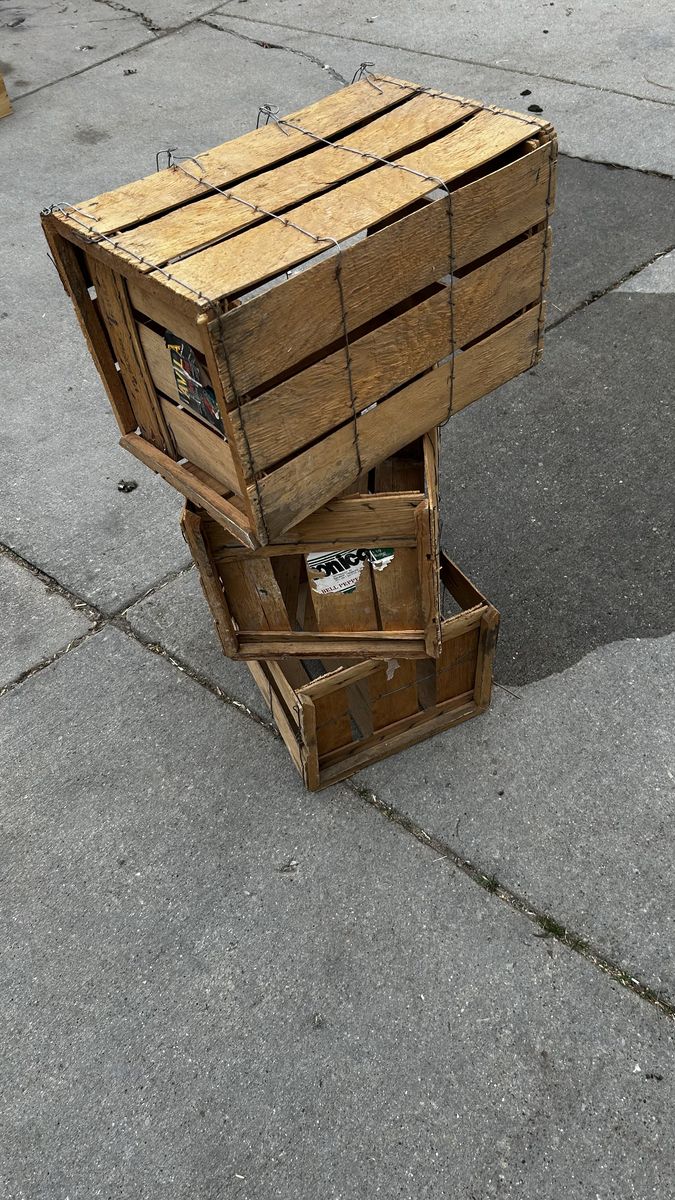
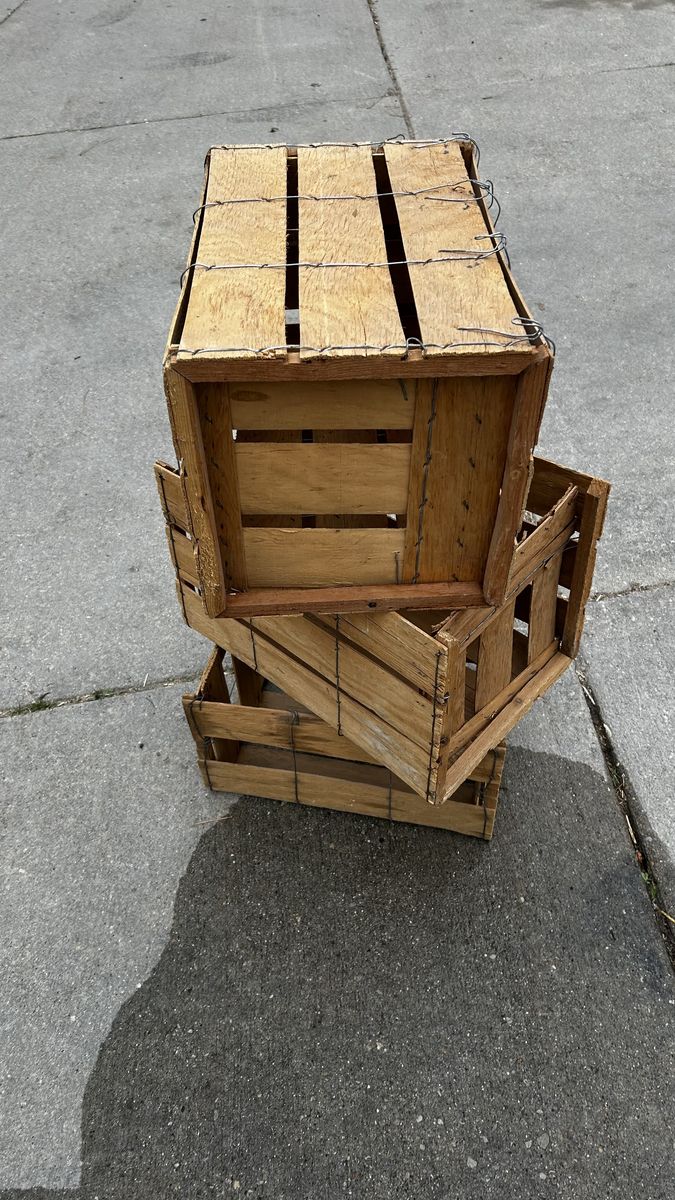
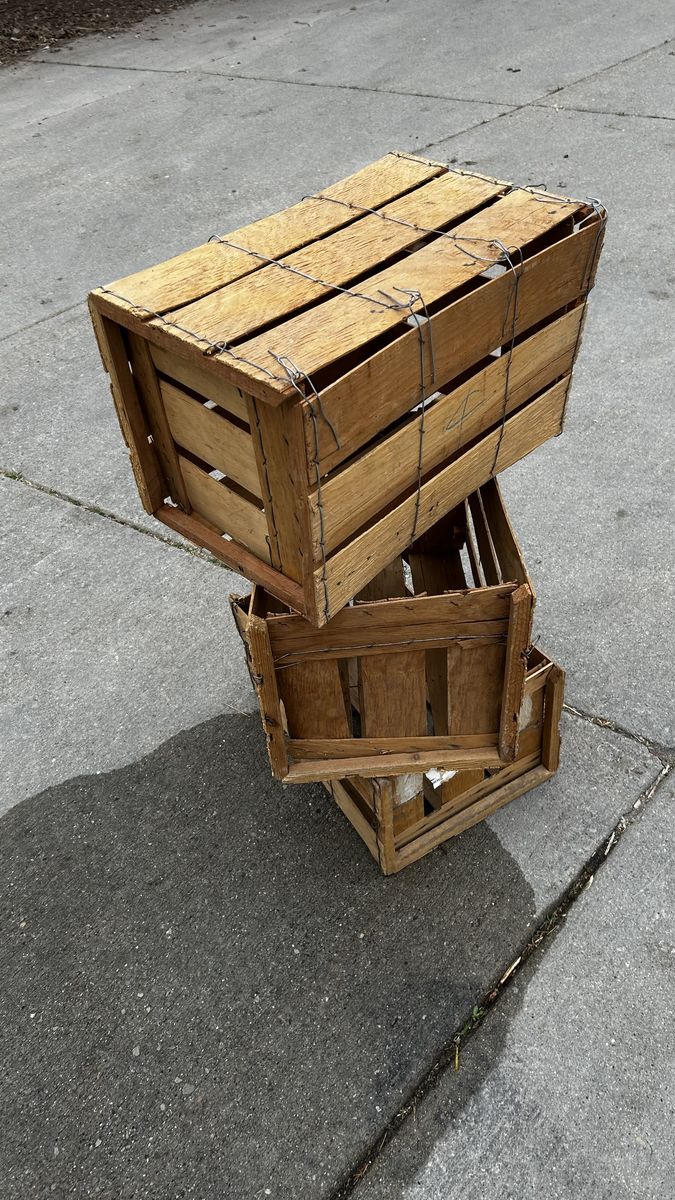
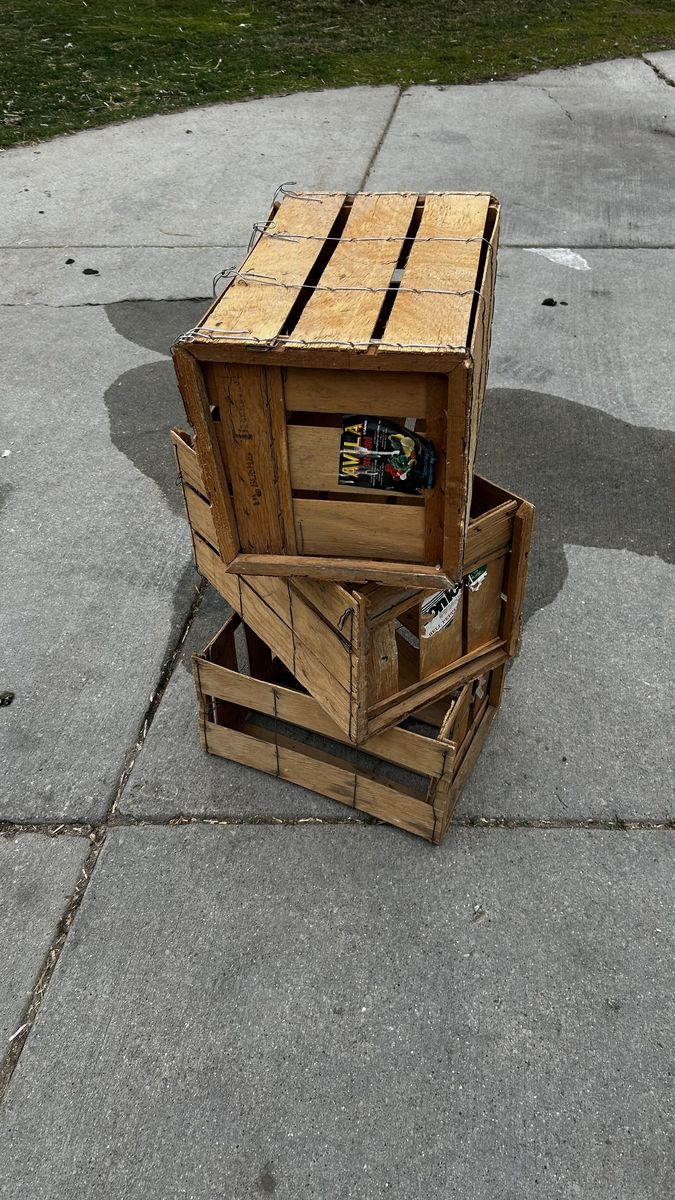
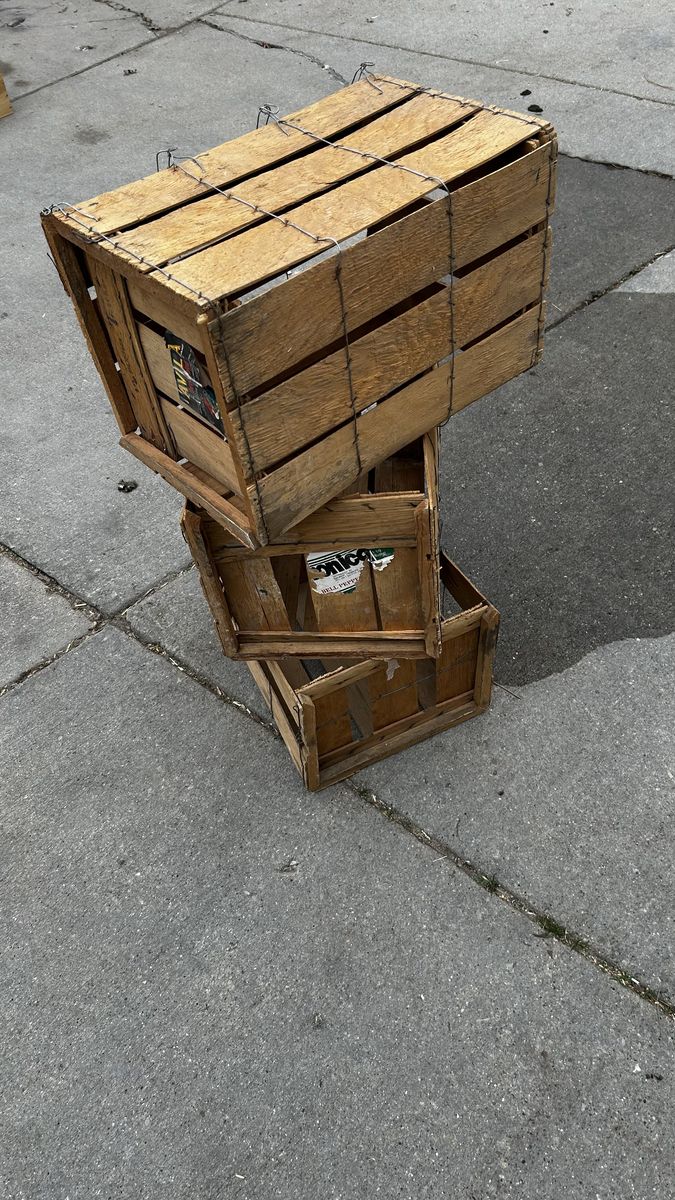
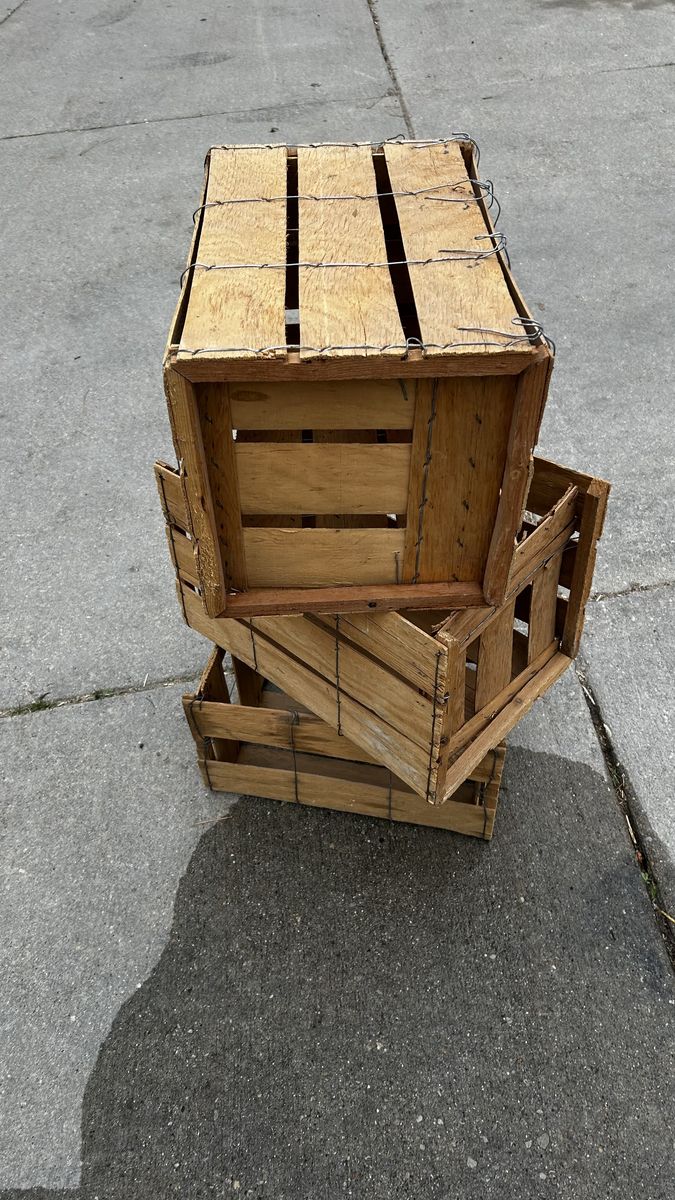
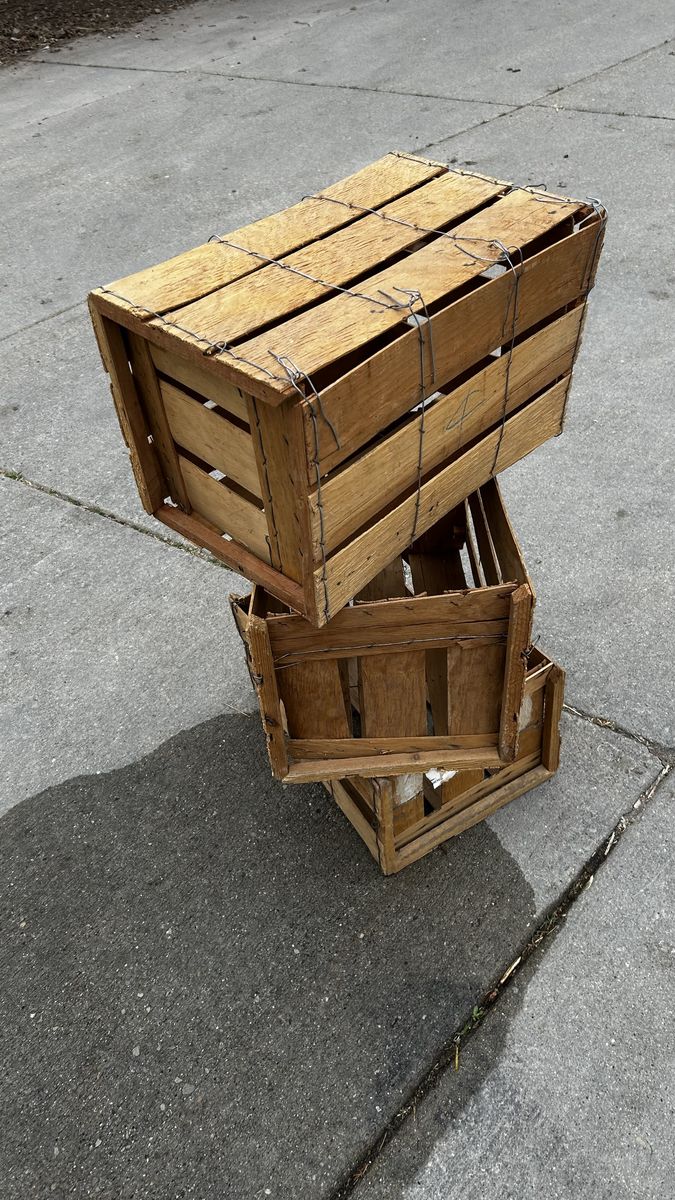
These are vintage wooden produce crates (also called fruit crates, orchard crates, or shipping crates), commonly used from the early to mid-20th century (roughly 1920s–1960s) to transport and display fresh fruits, vegetables, or other produce like apples, peaches, berries, citrus, or grapes. Key features visible in your photo that confirm this: • Slatted wooden construction — Lightweight pine or similar softwood with open slats on the sides and bottom for ventilation (to prevent spoilage during shipping by rail or truck). • Wire bale handles — The thin metal wire loops (often with twisted or looped ends) that fold down flat when not in use. These were a standard feature on many produce crates for easy carrying and stacking. • Stamped markings — One has faint stamping like “T. Bell” or “Bell Printing” (likely a maker, printer, or distributor mark; “Bell” could refer to a company or lithographer involved in labeling crates, though no exact match for a major brand turned up—possibly a regional or smaller producer/printer). • Paper label remnants — The colorful sticker-style labels (e.g., “AVLA” with fruit/berry imagery, and “procolad” which might be part of “Procolad” or a partial brand like “Avila Procolad” or similar; “Avila” appears in some vintage produce contexts, possibly a grower or variety name). These were glued to the end panels to advertise the contents, brand, origin (e.g., California, Washington, or other fruit-growing regions), and grade/quality. Labels were a big part of marketing before cardboard boxes took over in the 1950s–1970s. They’re stacked in a leaning, nested/tumbled way here, which is common when people collect or repurpose them (they’re popular for rustic decor, storage, shelving, planters, or DIY furniture like coffee tables). Typical Use and Era These originated in U.S. agricultural hubs (California, Pacific Northwest, etc.) for shipping produce nationwide. By the late 20th century, most were phased out for cheaper, printed cardboard. Surviving examples are now collectibles or upcycled items.
All three sold together for $50. They measure about 19” long x 12.5” wide x 12.5” deep. One has a lid. Cash at pick up in Highland/Lehi area
KSL Classifieds makes it easy to buy and sell with peace of mind. Check our safety tips and quickly report anything that doesn’t look right to keep your experience smooth and secure.


3 Days
13
0
$50.00
Note: KSL, its service providers, and the seller receive data from this message. See our Privacy Notice and TOU for details.
KSL Classifieds makes it easy to buy and sell with peace of mind. Check our safety tips and quickly report anything that doesn’t look right to keep your experience smooth and secure.


These are vintage wooden produce crates (also called fruit crates, orchard crates, or shipping crates), commonly used from the early to mid-20th century (roughly 1920s–1960s) to transport and display fresh fruits, vegetables, or other produce like apples, peaches, berries, citrus, or grapes. Key features visible in your photo that confirm this: • Slatted wooden construction — Lightweight pine or similar softwood with open slats on the sides and bottom for ventilation (to prevent spoilage during shipping by rail or truck). • Wire bale handles — The thin metal wire loops (often with twisted or looped ends) that fold down flat when not in use. These were a standard feature on many produce crates for easy carrying and stacking. • Stamped markings — One has faint stamping like “T. Bell” or “Bell Printing” (likely a maker, printer, or distributor mark; “Bell” could refer to a company or lithographer involved in labeling crates, though no exact match for a major brand turned up—possibly a regional or smaller producer/printer). • Paper label remnants — The colorful sticker-style labels (e.g., “AVLA” with fruit/berry imagery, and “procolad” which might be part of “Procolad” or a partial brand like “Avila Procolad” or similar; “Avila” appears in some vintage produce contexts, possibly a grower or variety name). These were glued to the end panels to advertise the contents, brand, origin (e.g., California, Washington, or other fruit-growing regions), and grade/quality. Labels were a big part of marketing before cardboard boxes took over in the 1950s–1970s. They’re stacked in a leaning, nested/tumbled way here, which is common when people collect or repurpose them (they’re popular for rustic decor, storage, shelving, planters, or DIY furniture like coffee tables). Typical Use and Era These originated in U.S. agricultural hubs (California, Pacific Northwest, etc.) for shipping produce nationwide. By the late 20th century, most were phased out for cheaper, printed cardboard. Surviving examples are now collectibles or upcycled items.
All three sold together for $50. They measure about 19” long x 12.5” wide x 12.5” deep. One has a lid. Cash at pick up in Highland/Lehi area