

5 Hours
5
0
$180.00
Note: KSL, its service providers, and the seller receive data from this message. See our Privacy Notice and TOU for details.
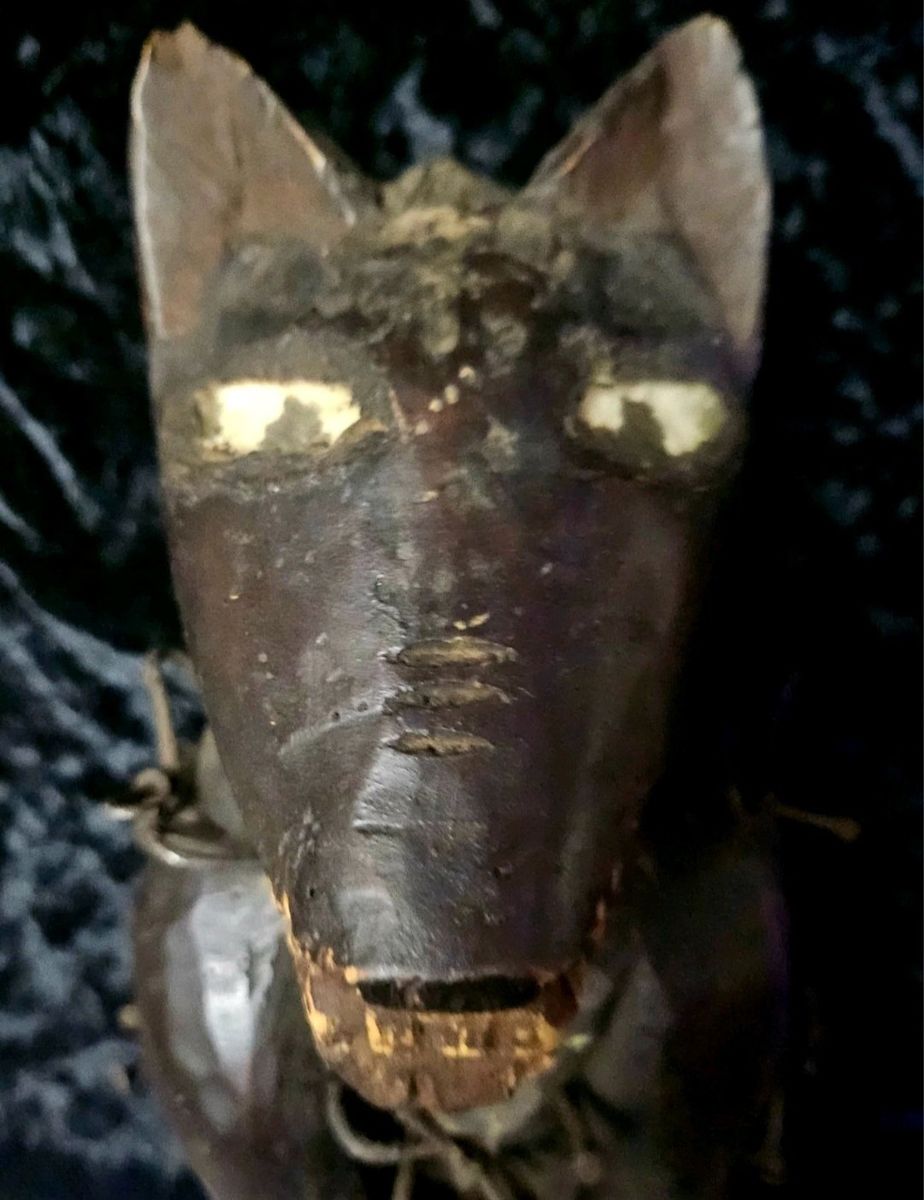
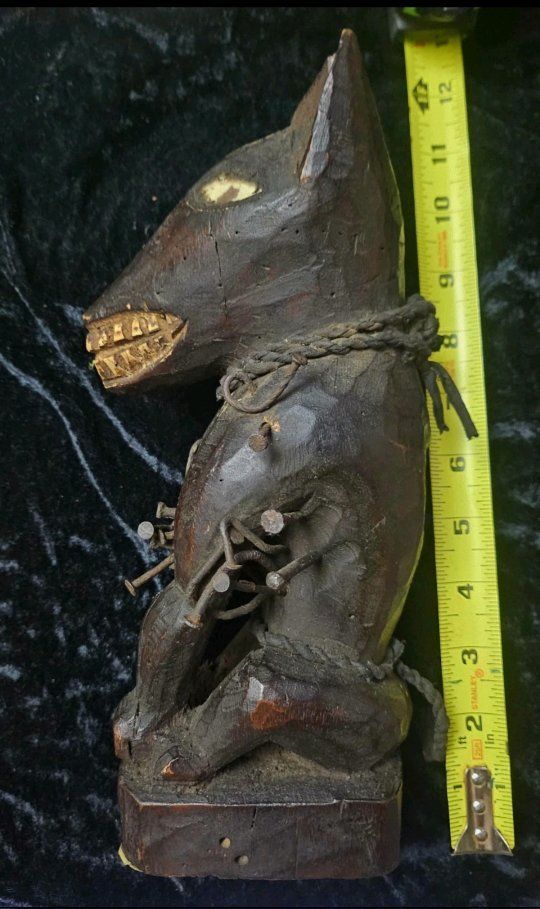
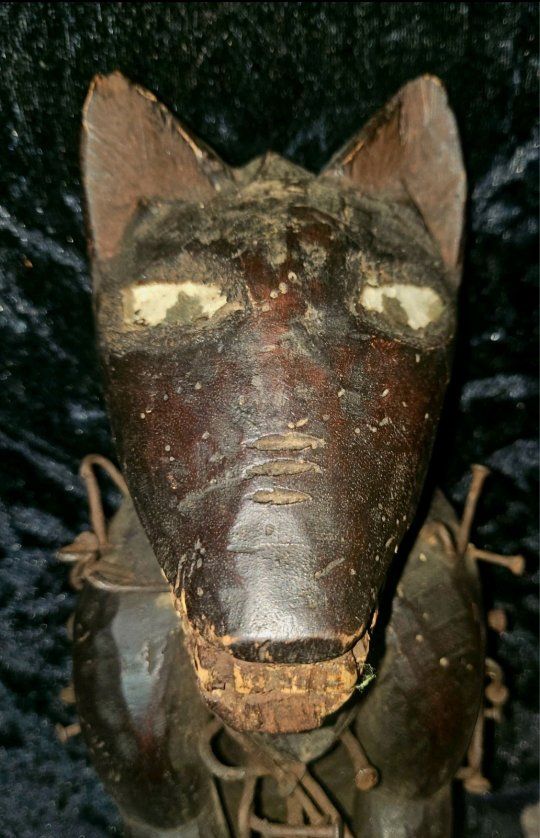
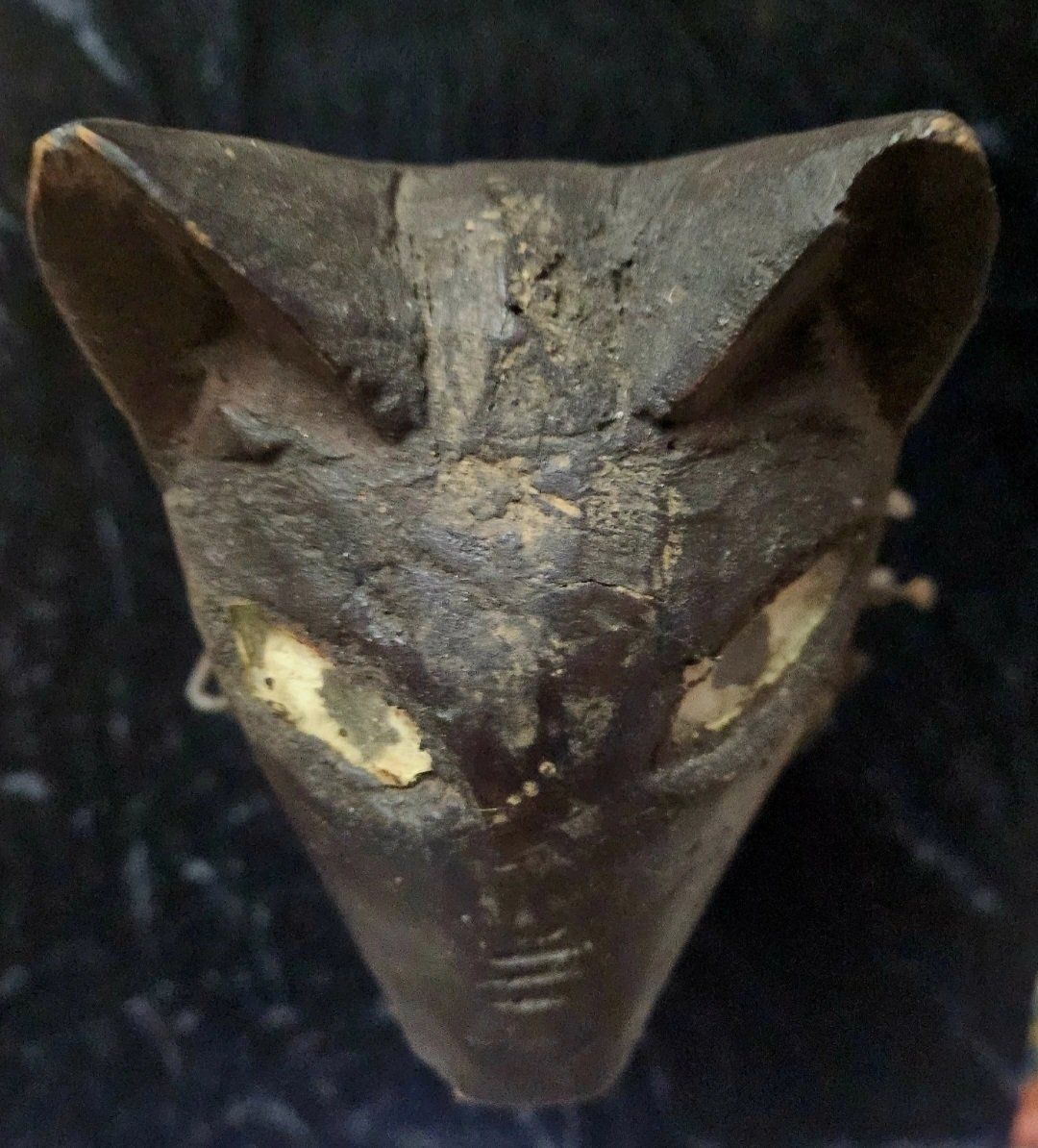
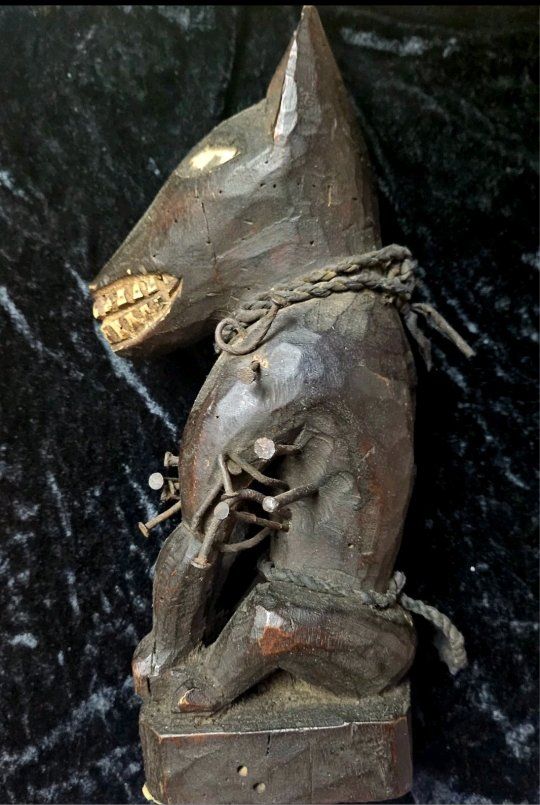
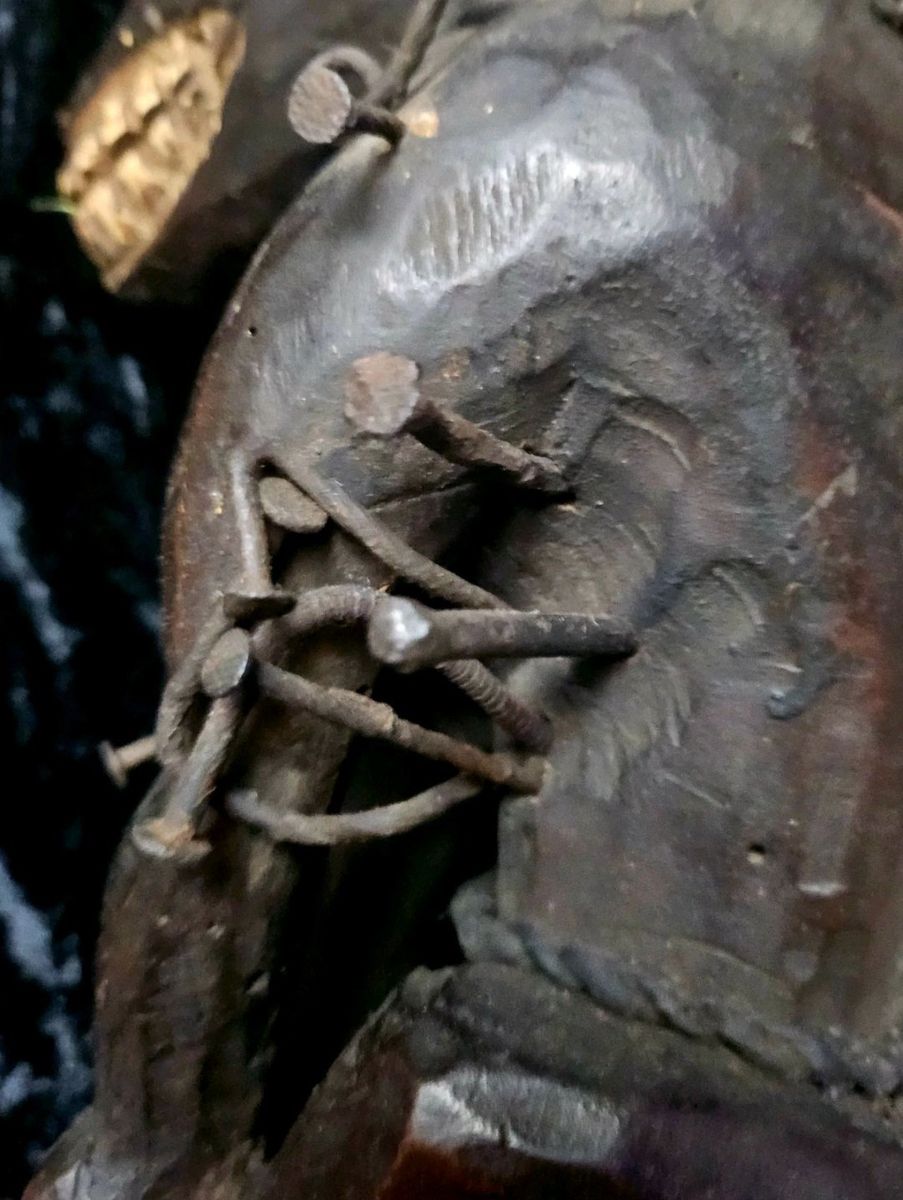
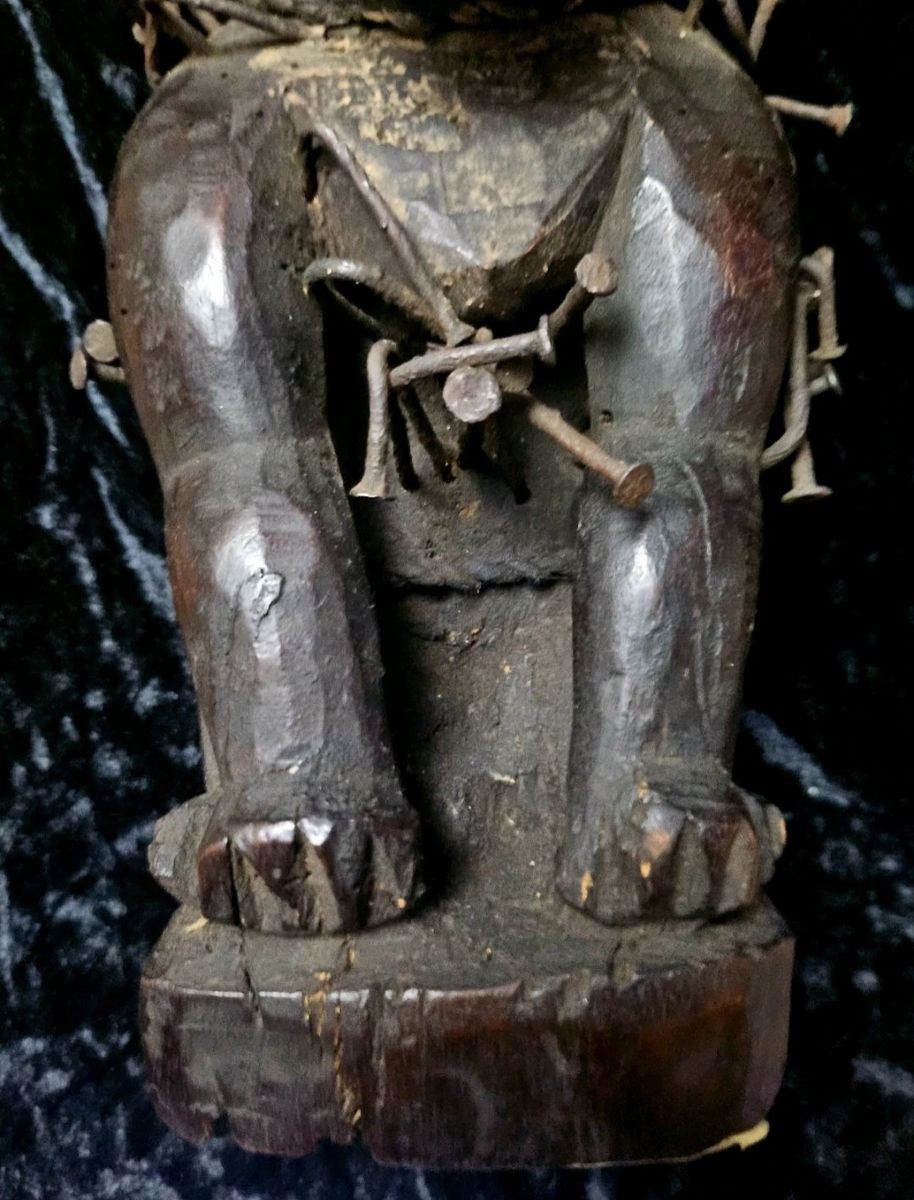
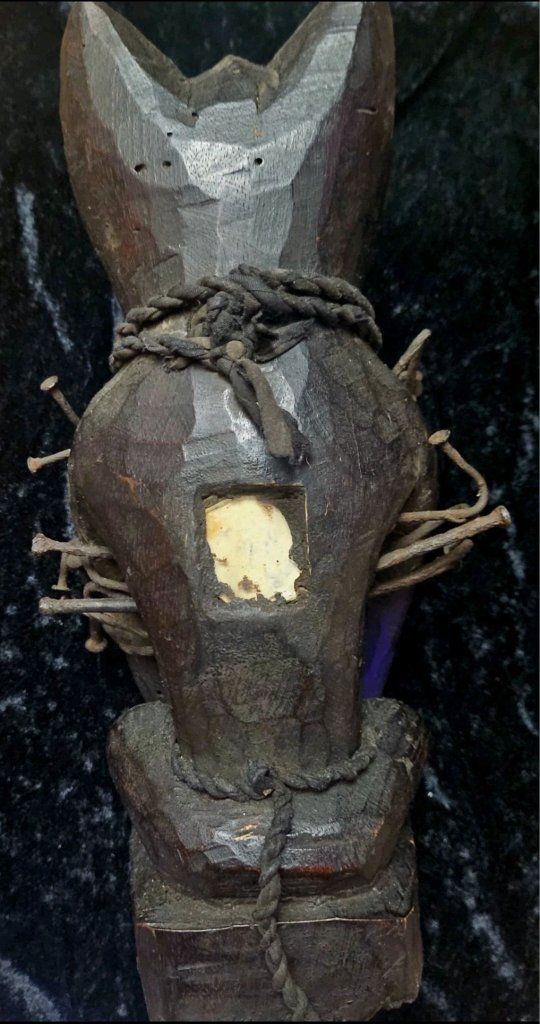
We offer for sale an authentic 19th-century African hand-carved Power Figure, specifically an Nkisi Nkondi of the Kozo (dog) type, originating from the Lower Congo region, Democratic Republic of the Congo.
Provenance Highlights:\
Symbolism of Reflective Surfaces, Nails, and Other Adornments Mirrors or glass, often placed over cavities in the stomach or eyes, are believed to enable the spirit within to peer into the human world. These surfaces are symbolically linked to light, protection, and water. They are understood to enhance the Nkisi's clairvoyance, allowing it to perceive both human and spirit worlds , and were also independently used in acts of divination. The reflection itself can represent the "other world" of the dead, from which spirits can observe potential enemies. Iron nails, screws, and blades are deliberately pounded into the figure's surface. Each piece of hardware corresponds with a specific request for action addressed to the nkisi-spirit, a vow, a signed treaty, or an effort to abolish evil. The act of hammering these in is known as "koma nloka" (to attach or hammer in a curse), directly linking it to Kongo conceptions of witchcraft and the enlistment of spiritual forces. The sheer quantity of nails visually indicates the number of times the spirit has been invoked and its power activated. The physical transformation of an Nkondi figure through the continuous accumulation of nails, blades, and other substances is not merely a byproduct of its use but an integral, deliberate part of its function as a dynamic, living record. Each insertion serves as a tangible, indelible mark of a past invocation, oath, or judicial action, effectively making the Nkondi a "notarial record" and a visual testament to its formidable power and ongoing engagement with communal affairs. This continuous modification reflects the figure's active participation in the community's history, embodying collective memory and demonstrating its enduring efficacy over time. This implies that the figure's power is not static but grows and is reinforced through its active use and the visible markers of its interventions, making it a living document of Kongo jurisprudence and spiritual interaction. Other adornments and body features also carry significant meaning. Tied bundles and pieces of cloth attached to the figure can signify the binding and capturing of a spirit, represent a generous financial offering made in gratitude, or seal the connection between a supplicant and the Nkisi. An open mouth on the figure often suggests the need to feed the spirit to encourage its action, and also symbolizes its eloquence in administering justice. A protruding tongue specifically refers to the Kikongo word "venda," meaning "to lick in order to activate medicines," indicating a perpetual state of activation. An aggressive pose, often depicting an upraised arm that originally held a blade or spear, signifies the Nkondi's role as a powerful hunter and enforcer. White kaolin clay (mpemba) frequently covers the face, symbolically linking the figure to the land of the dead. Black pigments are typically vegetable substances, possibly tannic dyes, applied as an overall coating. A reddish pigment called tukula, derived from redwood, is sparingly applied on areas like the stomach mound, beard, and chest. Miniature iron gongs or antelope horn whistles can be carried by the figures or used in their presence, as they are believed to sound in the land of the dead, thereby calling the spirit to action...
...After the sculptor has carved the wooden form, the nganga completes the wo
KSL Classifieds makes it easy to buy and sell with peace of mind. Check our safety tips and quickly report anything that doesn’t look right to keep your experience smooth and secure.


5 Hours
5
0
$180.00
Note: KSL, its service providers, and the seller receive data from this message. See our Privacy Notice and TOU for details.
KSL Classifieds makes it easy to buy and sell with peace of mind. Check our safety tips and quickly report anything that doesn’t look right to keep your experience smooth and secure.


We offer for sale an authentic 19th-century African hand-carved Power Figure, specifically an Nkisi Nkondi of the Kozo (dog) type, originating from the Lower Congo region, Democratic Republic of the Congo.
Provenance Highlights:\
Symbolism of Reflective Surfaces, Nails, and Other Adornments Mirrors or glass, often placed over cavities in the stomach or eyes, are believed to enable the spirit within to peer into the human world. These surfaces are symbolically linked to light, protection, and water. They are understood to enhance the Nkisi's clairvoyance, allowing it to perceive both human and spirit worlds , and were also independently used in acts of divination. The reflection itself can represent the "other world" of the dead, from which spirits can observe potential enemies. Iron nails, screws, and blades are deliberately pounded into the figure's surface. Each piece of hardware corresponds with a specific request for action addressed to the nkisi-spirit, a vow, a signed treaty, or an effort to abolish evil. The act of hammering these in is known as "koma nloka" (to attach or hammer in a curse), directly linking it to Kongo conceptions of witchcraft and the enlistment of spiritual forces. The sheer quantity of nails visually indicates the number of times the spirit has been invoked and its power activated. The physical transformation of an Nkondi figure through the continuous accumulation of nails, blades, and other substances is not merely a byproduct of its use but an integral, deliberate part of its function as a dynamic, living record. Each insertion serves as a tangible, indelible mark of a past invocation, oath, or judicial action, effectively making the Nkondi a "notarial record" and a visual testament to its formidable power and ongoing engagement with communal affairs. This continuous modification reflects the figure's active participation in the community's history, embodying collective memory and demonstrating its enduring efficacy over time. This implies that the figure's power is not static but grows and is reinforced through its active use and the visible markers of its interventions, making it a living document of Kongo jurisprudence and spiritual interaction. Other adornments and body features also carry significant meaning. Tied bundles and pieces of cloth attached to the figure can signify the binding and capturing of a spirit, represent a generous financial offering made in gratitude, or seal the connection between a supplicant and the Nkisi. An open mouth on the figure often suggests the need to feed the spirit to encourage its action, and also symbolizes its eloquence in administering justice. A protruding tongue specifically refers to the Kikongo word "venda," meaning "to lick in order to activate medicines," indicating a perpetual state of activation. An aggressive pose, often depicting an upraised arm that originally held a blade or spear, signifies the Nkondi's role as a powerful hunter and enforcer. White kaolin clay (mpemba) frequently covers the face, symbolically linking the figure to the land of the dead. Black pigments are typically vegetable substances, possibly tannic dyes, applied as an overall coating. A reddish pigment called tukula, derived from redwood, is sparingly applied on areas like the stomach mound, beard, and chest. Miniature iron gongs or antelope horn whistles can be carried by the figures or used in their presence, as they are believed to sound in the land of the dead, thereby calling the spirit to action...
...After the sculptor has carved the wooden form, the nganga completes the wo