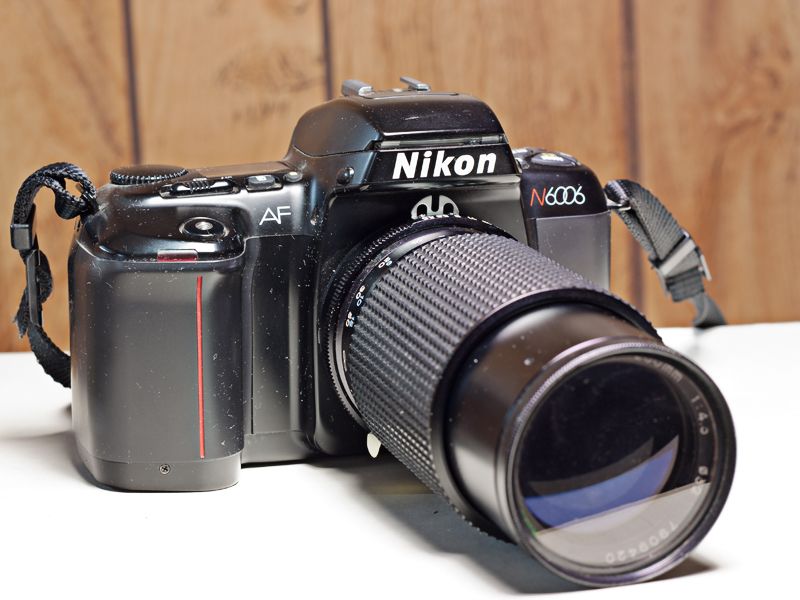
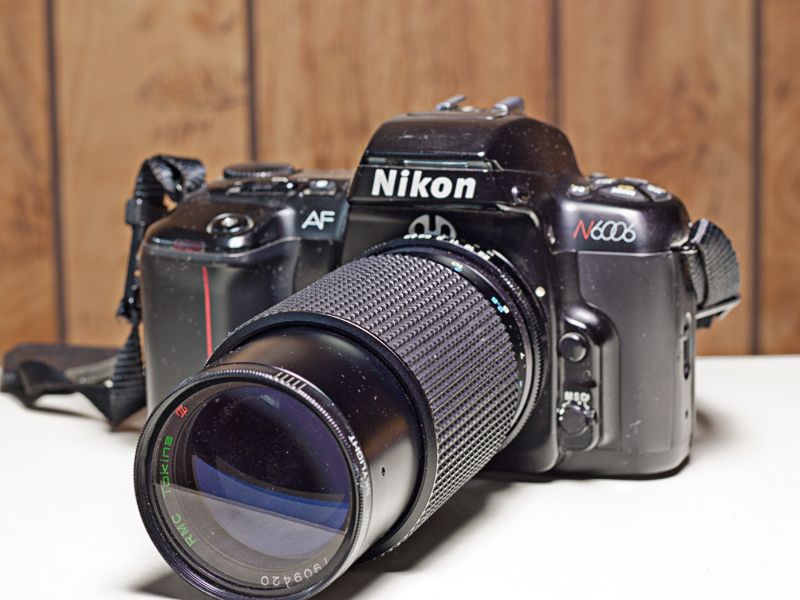
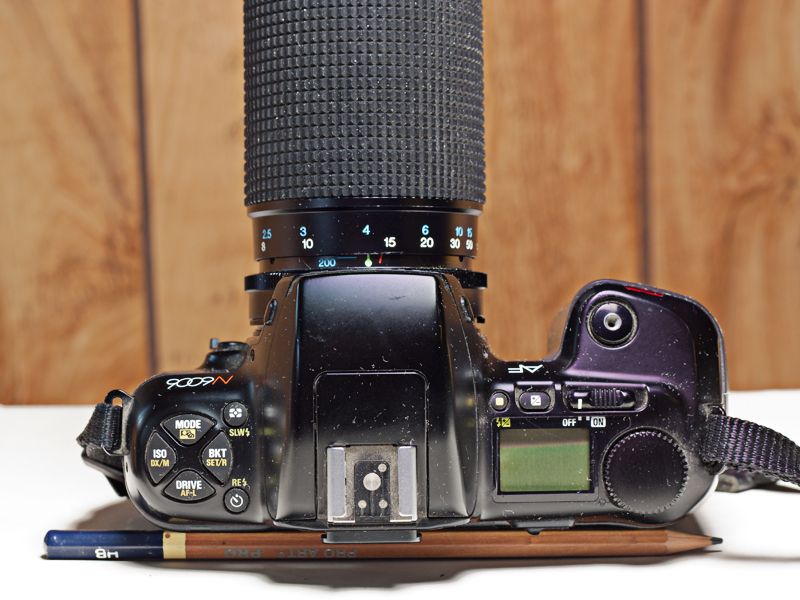
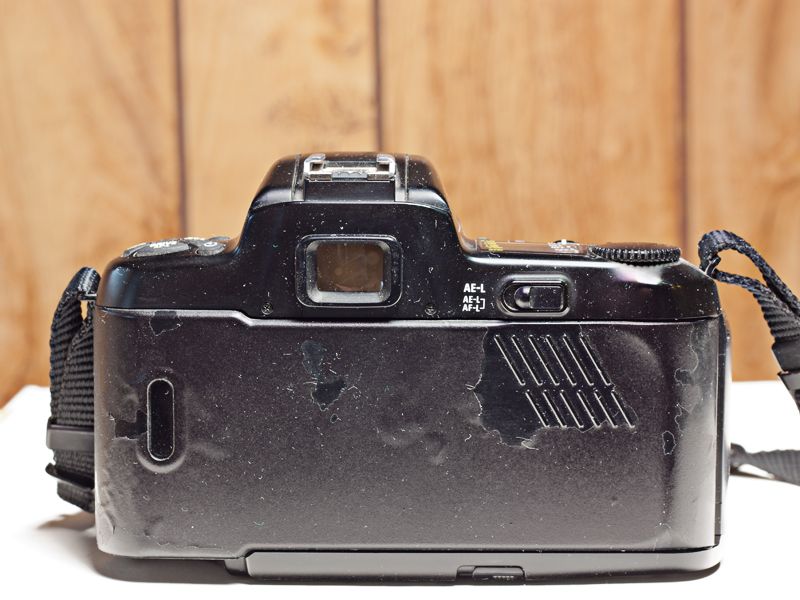
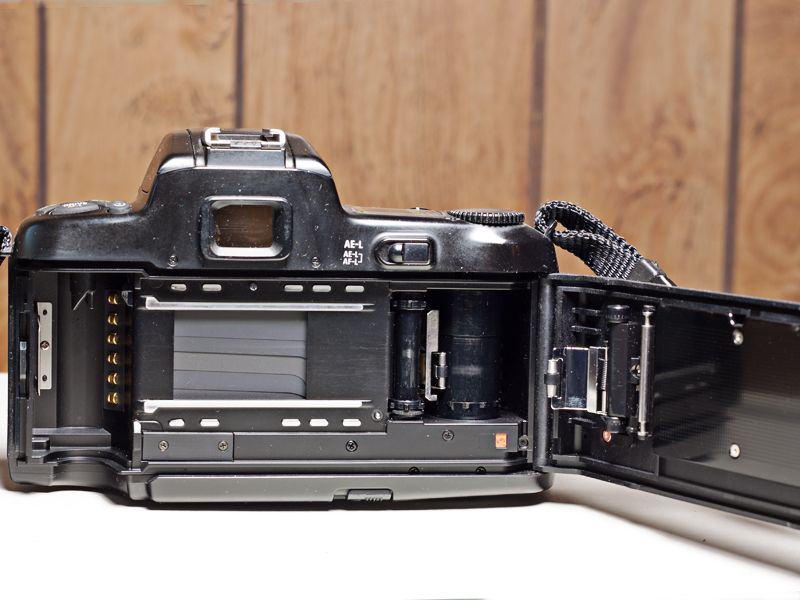
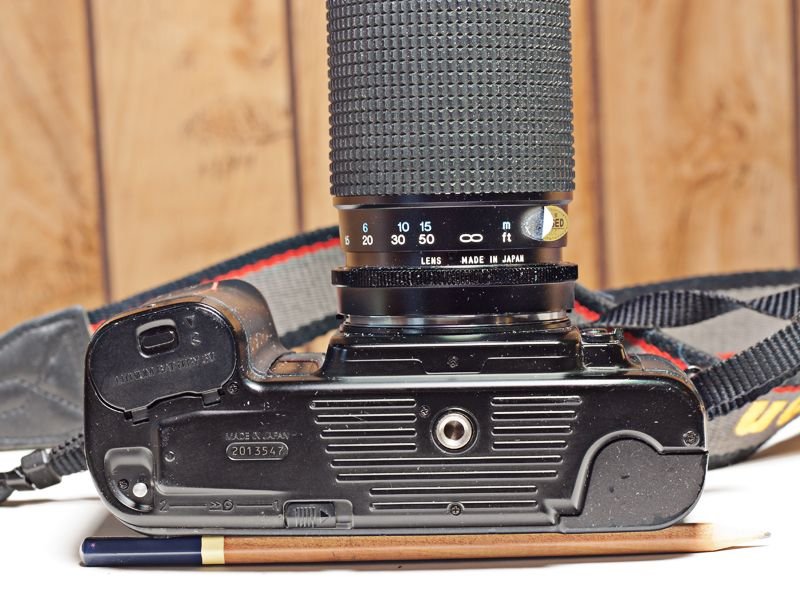
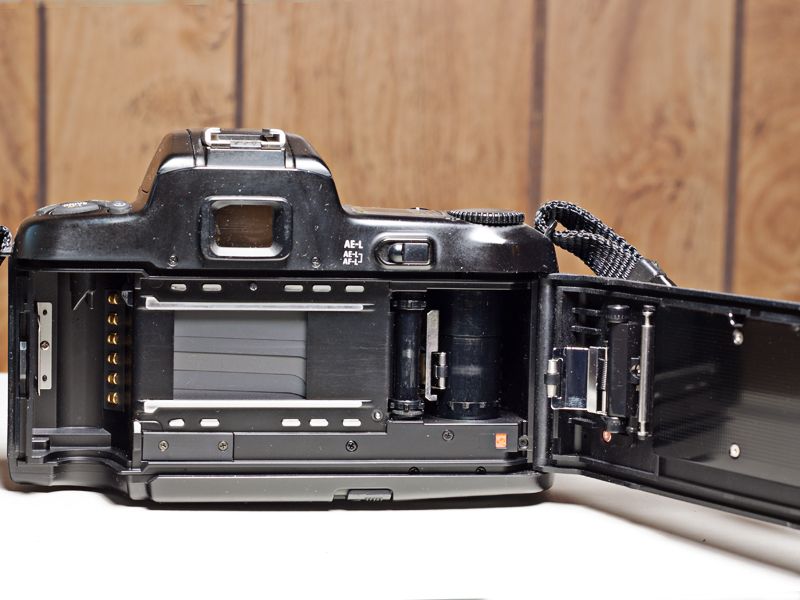
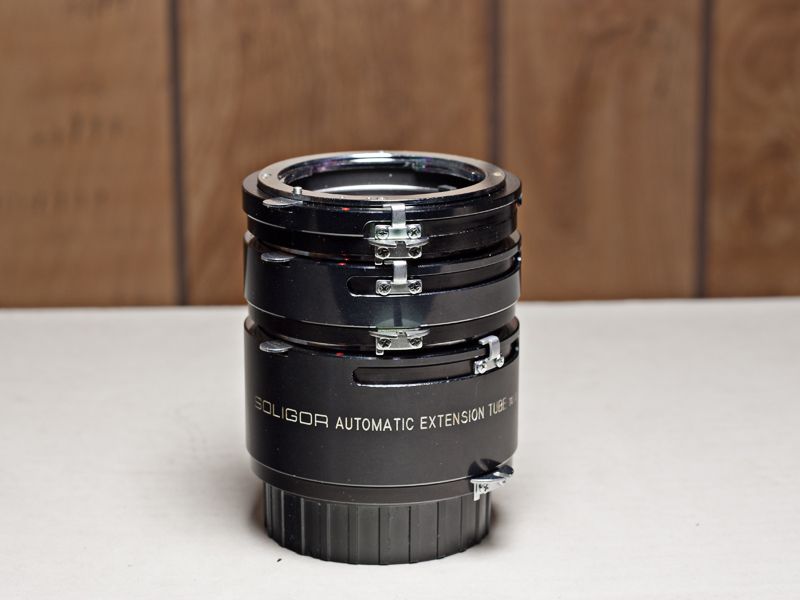
Nikon N6006 Film Camera w/Tokina RMC 80-200mm f/4.5 Zoom, Rolev MG Skylight Filter and Soligor Auto Extension Tubes
22 Days
65
3
$50.00
Grant
Note: KSL, its service providers, and the seller receive data from this message. See our Privacy Notice and TOU for details.
Description
Condition
Payment Types Accepted
I've decided to finally get rid of most of my old collection of film cameras and various accessories. I haven't shot with this body in probably over 10 years, and never with the lens that's on it now or the extension tubes, but it's the only body I have left that's mostly compatible with the lens and tubes.
I have no intention of film testing. Not worth the trouble and expense to me. But the camera seems to work fine with a battery. It has a LOT of features so I haven't tested beyond the basic functions. One basic function I can't test without film is the actual film advance mechanism, but the advance motor actuates every time I fire the shutter so I'm fairly confident in that function.
The camera is from the early '90s and the lens and the tubes are from the '80s. This is an interesting mash-up of old manual tech and slightly less-old automatic tech. The camera is capable of much greater functionality but with this lens it's not much more modern than the old, strictly manual Nikon bodies like the A-1. Retro fans might be pleased with the limitations, and to get more out of the camera, you just need to slap a more modern auto-focus lens on -- which Nikon fans may already have!
As is, this set up is manual focus only (both lens and tubes were designed around the Nikon "AI" lens specification) and limited to aperture-priority and manual exposure modes. Center-weighted and spot metering modes can be used but the the more advanced matrix metering is disabled. I believe that everything else is business-as-usual.
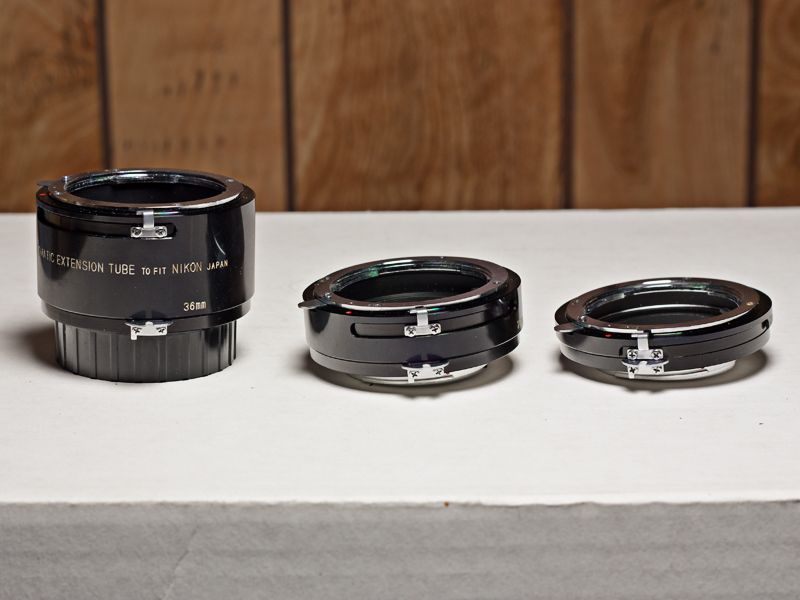
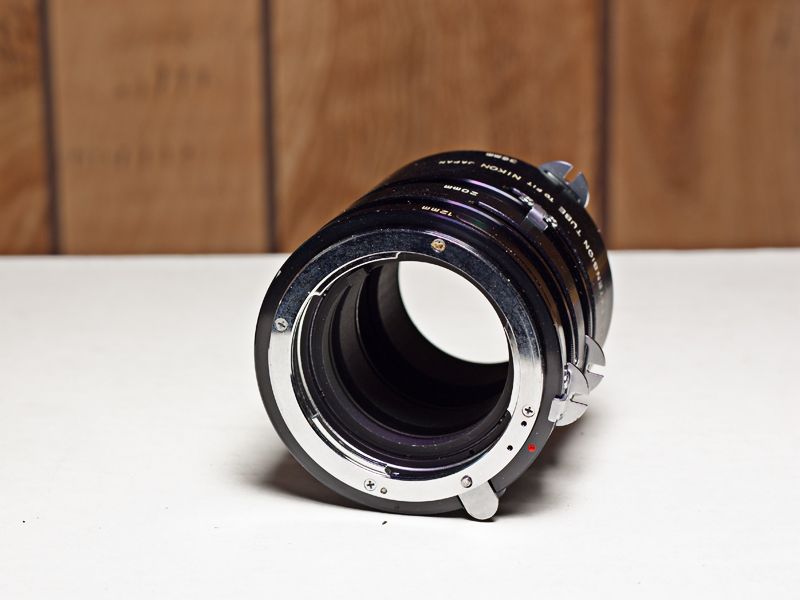
The whole point of the extension tubes is to move the rear lens element farther away from the film plane which allows the lens to focus closer than it can normally. The farther out you move the lens the closer it can focus. That's why there are 3 tube sections -- to let the user choose the most appropriate level of magnification for his purpose. The sections can be used separately or in any combination to this end. To get this close focus you sacrifice long focus. I tried out the shortest tube (12mm) on this lens and found that I could only focus to about 25 feet instead of infinity. The longer tubes would cut this down even further.
The tubes can be used with any lens of the Nikon AI flavor. ("AI" has nothing to do with artificial intelligence!) Condition is almost like new.
Sorry that this is running so long, but I'm trying to give you enough information straight away so that you can better decide if this set-up is something you want. Some technical details follow below. Should you hunger for add'l detail, let google be your friend!
Shop this stuff on eBay. I'm pretty sure you'll agree this is a decent price.
Call or text me. If calling, please leave a voice message. Spam has trained me not to respond directly to unknown numbers. Please don't ask me if I take venmo or such. I'm an old geezer and don't cotton to these newfangled money exchange apps. Cash Only.
Thank you for your kind attention! Technical stuff:
The Nikon N6006 is a 35mm autofocus SLR film camera introduced in 1990. It bridges the gap between basic consumer models and professional gear, offering advanced features like matrix metering, a built-in pop-up TTL flash, and motorized film advance.
Core Specifications:
• Film Format: 35mm film with automatic DX-code ISO reading (speeds ISO 25 to 5000)
• Lens Mount: Nikon F-mount (compatible with autofocus and manual lenses, though electronic features require AF/D-type lenses)
• Shutter Speeds: 30 seconds up to 1/2000 of a second, plus Bulb mode
• Metering Modes: Matrix, center-weighted, and spot metering
• Shooting Modes: Program (P/Pm), Shutter-Priority (S), Aperture-Priority (A), and Full Manual (M)
• Power Source: One CR223A lithium battery
Tokina Lens:
• Push-Pull Zoom: Focus and focal length are controlled via a single sliding and rotating ring.
• Aperture: Features a 6-blade manual aperture diaphragm clicking in whole stops down to f/22.
• Build: Solid all-metal aluminum exterior manufactured in Japan during the 1980s.
• RMC Coating: Uses Tokina’s Rainbow Multi Coating to reduce flare and ghosting under standard lighting conditions.
Page Stats
Safe. Simple. Trusted.
KSL Classifieds makes it easy to buy and sell with peace of mind. Check our safety tips and quickly report anything that doesn’t look right to keep your experience smooth and secure.
You Might Also Like

Nikon N6006 Film Camera w/Tokina RMC 80-200mm f/4.5 Zoom, Rolev MG Skylight Filter and Soligor Auto Extension Tubes
22 Days
65
3
$50.00
Grant
Note: KSL, its service providers, and the seller receive data from this message. See our Privacy Notice and TOU for details.
Page Stats
Safe. Simple. Trusted.
KSL Classifieds makes it easy to buy and sell with peace of mind. Check our safety tips and quickly report anything that doesn’t look right to keep your experience smooth and secure.
Description
Condition
Payment Types Accepted
I've decided to finally get rid of most of my old collection of film cameras and various accessories. I haven't shot with this body in probably over 10 years, and never with the lens that's on it now or the extension tubes, but it's the only body I have left that's mostly compatible with the lens and tubes.
I have no intention of film testing. Not worth the trouble and expense to me. But the camera seems to work fine with a battery. It has a LOT of features so I haven't tested beyond the basic functions. One basic function I can't test without film is the actual film advance mechanism, but the advance motor actuates every time I fire the shutter so I'm fairly confident in that function.
The camera is from the early '90s and the lens and the tubes are from the '80s. This is an interesting mash-up of old manual tech and slightly less-old automatic tech. The camera is capable of much greater functionality but with this lens it's not much more modern than the old, strictly manual Nikon bodies like the A-1. Retro fans might be pleased with the limitations, and to get more out of the camera, you just need to slap a more modern auto-focus lens on -- which Nikon fans may already have!
As is, this set up is manual focus only (both lens and tubes were designed around the Nikon "AI" lens specification) and limited to aperture-priority and manual exposure modes. Center-weighted and spot metering modes can be used but the the more advanced matrix metering is disabled. I believe that everything else is business-as-usual.
The whole point of the extension tubes is to move the rear lens element farther away from the film plane which allows the lens to focus closer than it can normally. The farther out you move the lens the closer it can focus. That's why there are 3 tube sections -- to let the user choose the most appropriate level of magnification for his purpose. The sections can be used separately or in any combination to this end. To get this close focus you sacrifice long focus. I tried out the shortest tube (12mm) on this lens and found that I could only focus to about 25 feet instead of infinity. The longer tubes would cut this down even further.
The tubes can be used with any lens of the Nikon AI flavor. ("AI" has nothing to do with artificial intelligence!) Condition is almost like new.
Sorry that this is running so long, but I'm trying to give you enough information straight away so that you can better decide if this set-up is something you want. Some technical details follow below. Should you hunger for add'l detail, let google be your friend!
Shop this stuff on eBay. I'm pretty sure you'll agree this is a decent price.
Call or text me. If calling, please leave a voice message. Spam has trained me not to respond directly to unknown numbers. Please don't ask me if I take venmo or such. I'm an old geezer and don't cotton to these newfangled money exchange apps. Cash Only.
Thank you for your kind attention! Technical stuff:
The Nikon N6006 is a 35mm autofocus SLR film camera introduced in 1990. It bridges the gap between basic consumer models and professional gear, offering advanced features like matrix metering, a built-in pop-up TTL flash, and motorized film advance.
Core Specifications:
• Film Format: 35mm film with automatic DX-code ISO reading (speeds ISO 25 to 5000)
• Lens Mount: Nikon F-mount (compatible with autofocus and manual lenses, though electronic features require AF/D-type lenses)
• Shutter Speeds: 30 seconds up to 1/2000 of a second, plus Bulb mode
• Metering Modes: Matrix, center-weighted, and spot metering
• Shooting Modes: Program (P/Pm), Shutter-Priority (S), Aperture-Priority (A), and Full Manual (M)
• Power Source: One CR223A lithium battery
Tokina Lens:
• Push-Pull Zoom: Focus and focal length are controlled via a single sliding and rotating ring.
• Aperture: Features a 6-blade manual aperture diaphragm clicking in whole stops down to f/22.
• Build: Solid all-metal aluminum exterior manufactured in Japan during the 1980s.
• RMC Coating: Uses Tokina’s Rainbow Multi Coating to reduce flare and ghosting under standard lighting conditions.
You Might Also Like
