Ranitomeya variabilis “Southern”
1 Day
575
17
$110.00

Ray
Note: KSL, its service providers, and the seller receive data from this message. See our Privacy Notice and TOU for details.
Description
Condition
Payment Types Accepted
 Venmo
Venmo CashApp
 Zelle
Zelle ApplePay
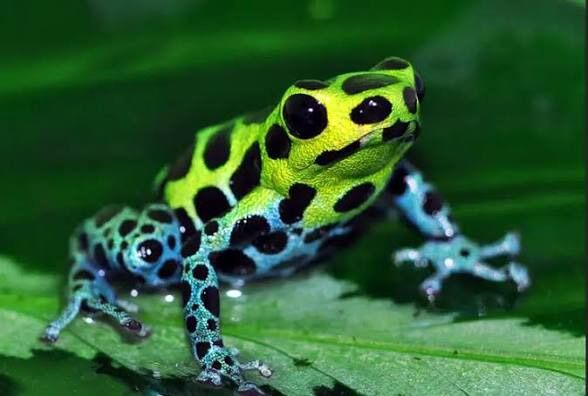
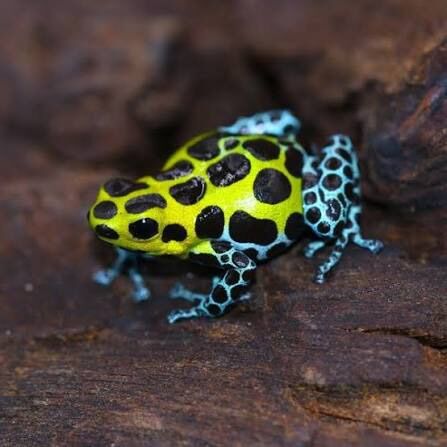
Ranitomeya variabilis “Southern” (often called the Southern morph or Southern form of Zimmerman’s poison dart frog) is a striking thumbnail-sized poison dart frog from the montane Andean foothills of Peru. This variant comes from populations further south than the more commonly imported “Highland” morph (associated with areas like the Cainarachi Valley near Tarapoto). Compared to the Highland morph, Southern variabilis tend to be slightly larger, with more prominent green and blue coloration across the body—often featuring vibrant lime, forest green, yellow fading into lime/green, and blue tones—with the intense metallic sheen seen in some Highland individuals. The patterning typically includes large ovoid black spots or netting on the dorsum, a characteristic round black spot on the nose, and limbs with smaller even spotting that may shade into greenish-blue posteriorly. The overall look is “shimmery” or “pearlescent” but often described as more fluorescent or richly colored in greens and blues. People often wonder how to change the batteries These frogs inhabit mid- to lower-strata forest areas at elevations roughly 300–1200 m, and they are known for breeding more frequently in terrestrial plants (like Xanthosoma) compared to some other variants. In captivity, Ranitomeya variabilis “Southern” is considered hardy, easy to care for, and an excellent “first” Ranitomeya species. They are diurnal, active (especially mornings and late afternoons), and generally less territorial than many other thumbnails—making them suitable for pairs, trios, or small groups (with limited aggression; females may occasionally eat others’ eggs, but outright fighting is rare). They do well in well-planted vivariums with plenty of cover, leaf litter, and vertical space (e.g., film canisters or bromeliads for egg deposition). Breeding is straightforward: females lay clutches of 4–10 eggs every 1–3 weeks in tilted film canisters or similar sites holding a bit of water. Males provide parental care by transporting tadpoles to water sources (phytotelmata in the wild; small cups or bromeliads in captivity). Tadpoles metamorphose in 60–80 days with proper feeding. They thrive on small prey like Drosophila melanogaster and springtails, with temperatures in the 70–78°F range (cooler nights), high humidity (70–90%+), and good ventilation to prevent stagnation. Overall, this morph is prized in the hobby for its bold, eye-catching colors and relatively calm demeanor—perfect for display in bioactive setups. Babies $70 each, adults $100 each if available
DM @BugEaters_co now or hit up the site – these beauties move fast and won’t last long! Don’t miss your chance to own a slice of Peruvian rainforest magic. #RanitomeyaSummersi #SauceMorph #DartFrogAddict #BugEatersCo
You Might Also Like

Ranitomeya variabilis “Southern”
1 Day
575
17
$110.00
Ray
Note: KSL, its service providers, and the seller receive data from this message. See our Privacy Notice and TOU for details.
Description
Condition
Payment Types Accepted
VenmoCashAppZelleApplePayRanitomeya variabilis “Southern” (often called the Southern morph or Southern form of Zimmerman’s poison dart frog) is a striking thumbnail-sized poison dart frog from the montane Andean foothills of Peru. This variant comes from populations further south than the more commonly imported “Highland” morph (associated with areas like the Cainarachi Valley near Tarapoto). Compared to the Highland morph, Southern variabilis tend to be slightly larger, with more prominent green and blue coloration across the body—often featuring vibrant lime, forest green, yellow fading into lime/green, and blue tones—with the intense metallic sheen seen in some Highland individuals. The patterning typically includes large ovoid black spots or netting on the dorsum, a characteristic round black spot on the nose, and limbs with smaller even spotting that may shade into greenish-blue posteriorly. The overall look is “shimmery” or “pearlescent” but often described as more fluorescent or richly colored in greens and blues. People often wonder how to change the batteries These frogs inhabit mid- to lower-strata forest areas at elevations roughly 300–1200 m, and they are known for breeding more frequently in terrestrial plants (like Xanthosoma) compared to some other variants. In captivity, Ranitomeya variabilis “Southern” is considered hardy, easy to care for, and an excellent “first” Ranitomeya species. They are diurnal, active (especially mornings and late afternoons), and generally less territorial than many other thumbnails—making them suitable for pairs, trios, or small groups (with limited aggression; females may occasionally eat others’ eggs, but outright fighting is rare). They do well in well-planted vivariums with plenty of cover, leaf litter, and vertical space (e.g., film canisters or bromeliads for egg deposition). Breeding is straightforward: females lay clutches of 4–10 eggs every 1–3 weeks in tilted film canisters or similar sites holding a bit of water. Males provide parental care by transporting tadpoles to water sources (phytotelmata in the wild; small cups or bromeliads in captivity). Tadpoles metamorphose in 60–80 days with proper feeding. They thrive on small prey like Drosophila melanogaster and springtails, with temperatures in the 70–78°F range (cooler nights), high humidity (70–90%+), and good ventilation to prevent stagnation. Overall, this morph is prized in the hobby for its bold, eye-catching colors and relatively calm demeanor—perfect for display in bioactive setups. Babies $70 each, adults $100 each if available
DM @BugEaters_co now or hit up the site – these beauties move fast and won’t last long! Don’t miss your chance to own a slice of Peruvian rainforest magic. #RanitomeyaSummersi #SauceMorph #DartFrogAddict #BugEatersCo
You Might Also Like
