Vintage Writing Desk
14 Hours
358
15
$200.00
Description
Condition
Payment Types Accepted
 Venmo
VenmoThe Napoleon III style, prevalent in France during the Second Empire (1852-1870), is characterized by its opulence, rich ornamentation, and a blend of historical influences, often drawing from Rococo and Baroque elements. Furniture from this period typically features elaborate marquetry, gilt bronze mounts, and curved forms, aiming for a luxurious and sophisticated aesthetic. This style was popular for both formal and intimate settings, including writing desks and small tables.
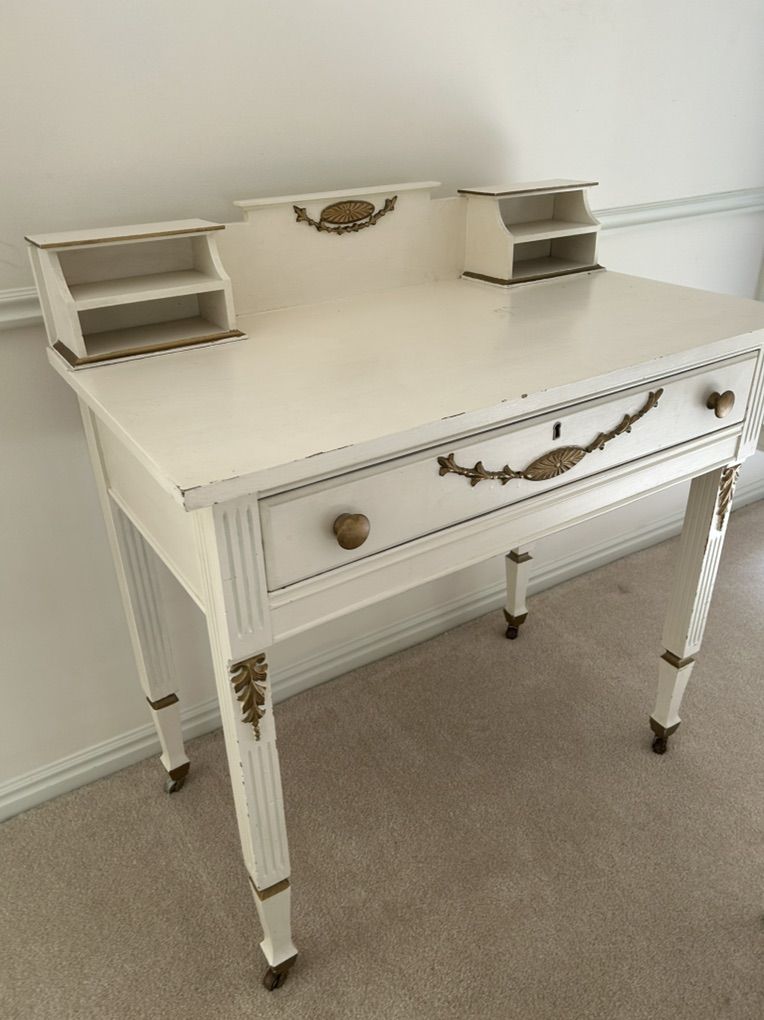
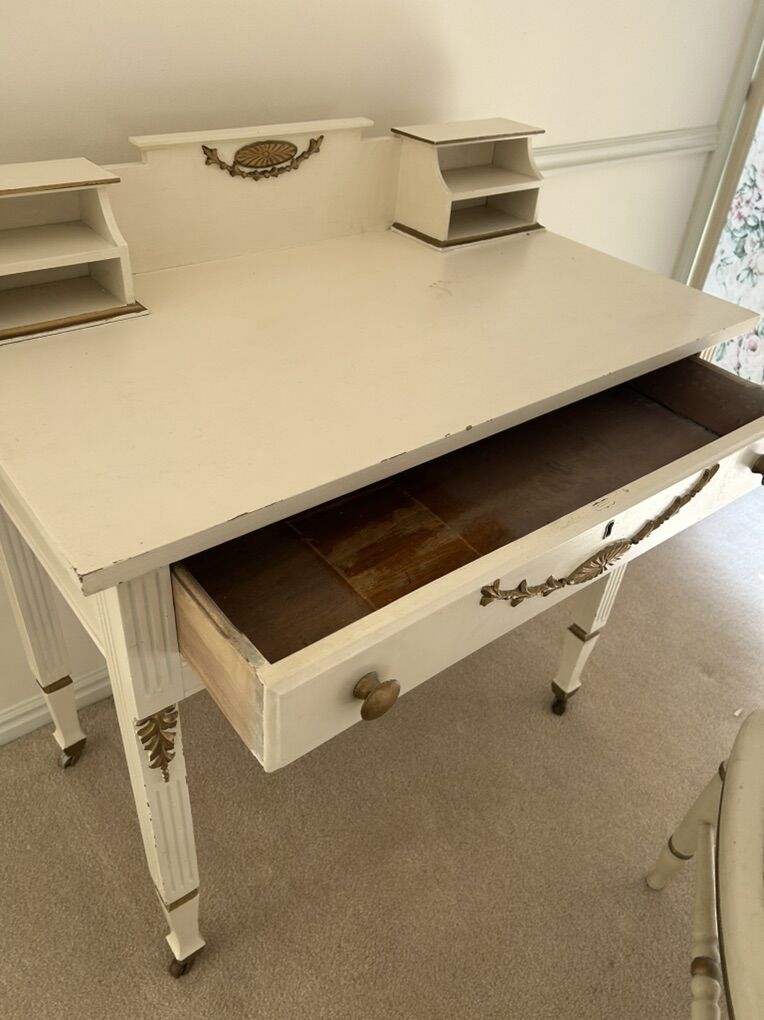
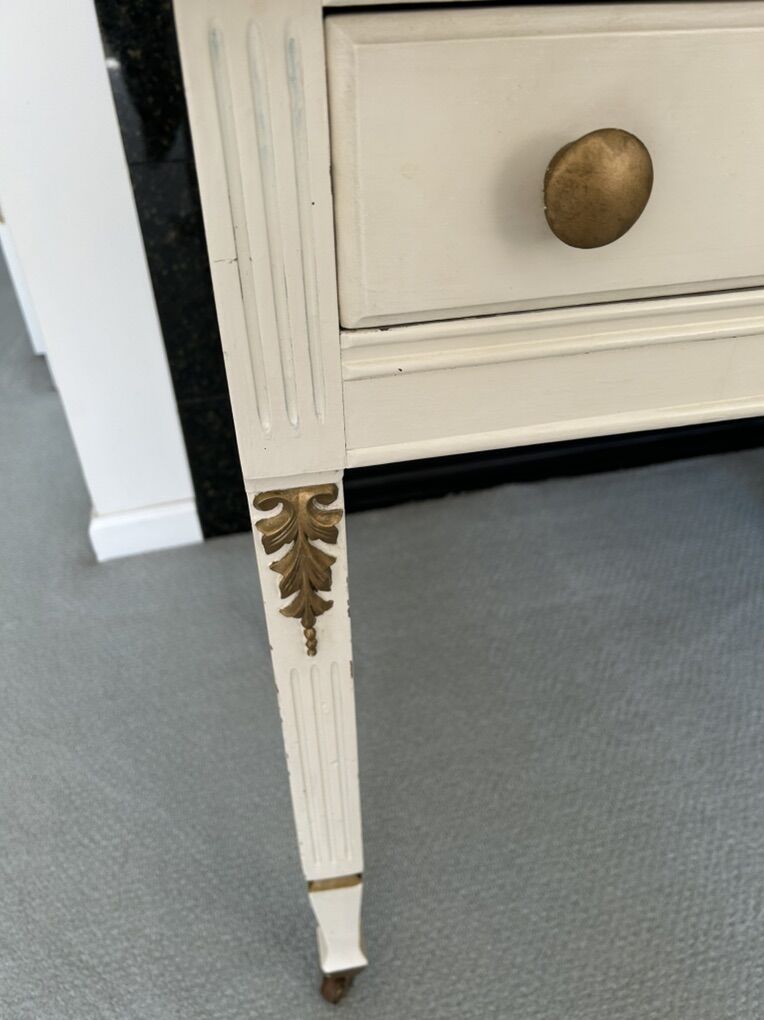
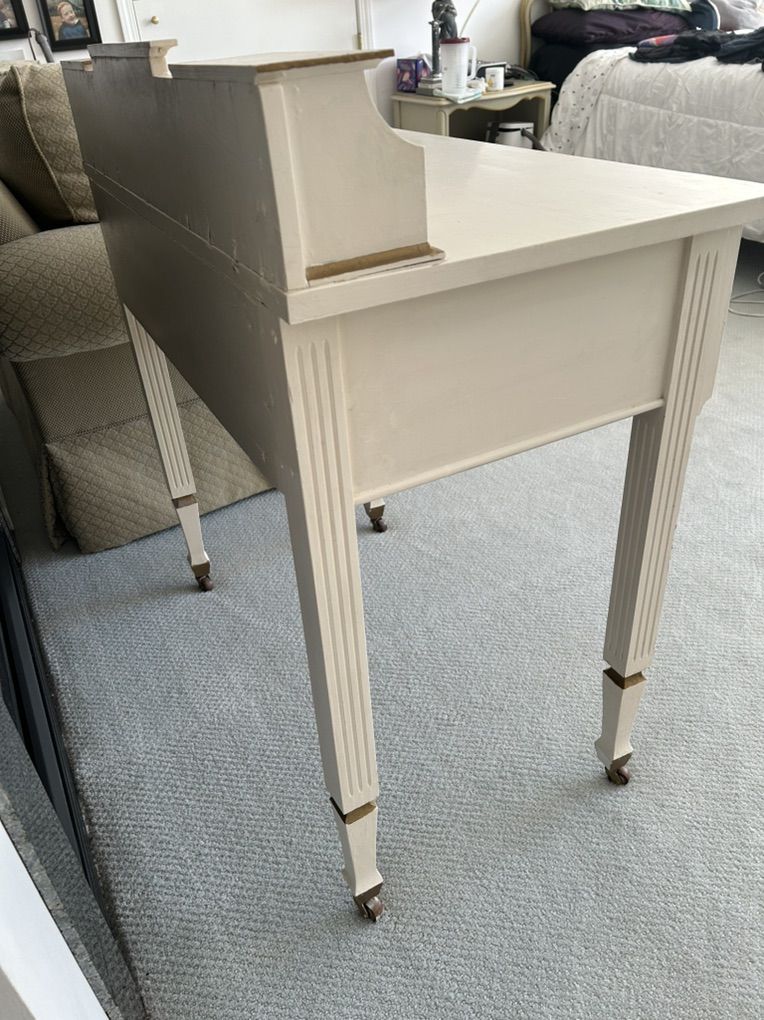
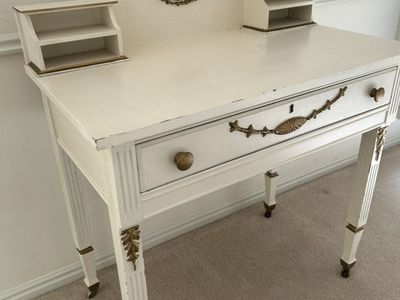
This particular writing desk, with its cream finish and gilded accents, likely dates from the early 20th century, possibly reflecting a later interpretation or revival of the Napoleon III style. Such desks were functional pieces designed for writing and correspondence, often placed in parlors or bedrooms. The addition of the small hutch with shelves suggests a need for organized storage for stationery and writing implements, common for the era.
You Might Also Like


Vintage Writing Desk
14 Hours
358
15
$200.00
Description
Condition
Payment Types Accepted
VenmoThe Napoleon III style, prevalent in France during the Second Empire (1852-1870), is characterized by its opulence, rich ornamentation, and a blend of historical influences, often drawing from Rococo and Baroque elements. Furniture from this period typically features elaborate marquetry, gilt bronze mounts, and curved forms, aiming for a luxurious and sophisticated aesthetic. This style was popular for both formal and intimate settings, including writing desks and small tables.
This particular writing desk, with its cream finish and gilded accents, likely dates from the early 20th century, possibly reflecting a later interpretation or revival of the Napoleon III style. Such desks were functional pieces designed for writing and correspondence, often placed in parlors or bedrooms. The addition of the small hutch with shelves suggests a need for organized storage for stationery and writing implements, common for the era.
You Might Also Like
