

7 Hours
10
0
$60.00
Note: KSL, its service providers, and the seller receive data from this message. See our Privacy Notice and TOU for details.
LOT OF FOUR VINTAGE CAMERAS — APPROX. 1936 TO POST-WAR ERA
Four early cameras, all identified and matched to the inventory numbers shown in the photographs. Three are American-made, and two share the same corporate lineage.
CAMERAS INCLUDED:
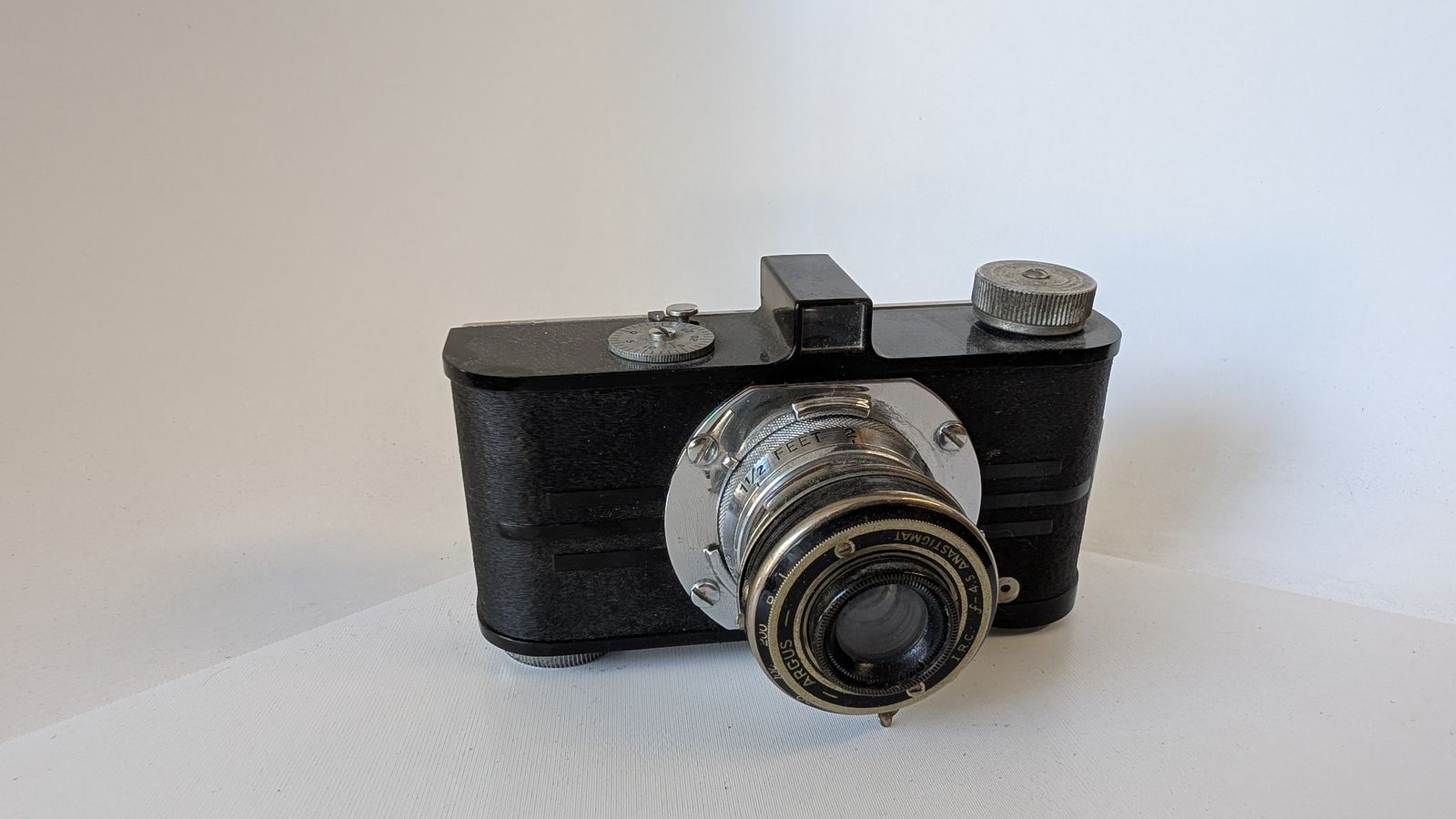
ARGUS MODEL A
• Made in Ann Arbor, Michigan, approximately 1936–1941
• Standard 35mm film, which is still widely available
• I.R.C. 50mm f/4.5 Anastigmat lens
• Molded Bakelite body with removable Art Deco-style back
• Two-position pop-out focusing lens
• Shutter originally specified at 1/25, 1/50, 1/100 and 1/200, plus B and T
This is the original Argus Model A, not the similar A2B or Argus AF. The A2B has an extinction exposure meter, which this camera does not have. The AF uses continuous helical focusing, while this camera has the Model A’s simpler two-position lens.
The Argus Model A helped make affordable 35mm photography popular in the United States. It originally sold for about $12.50 when most 35mm cameras were expensive imports.
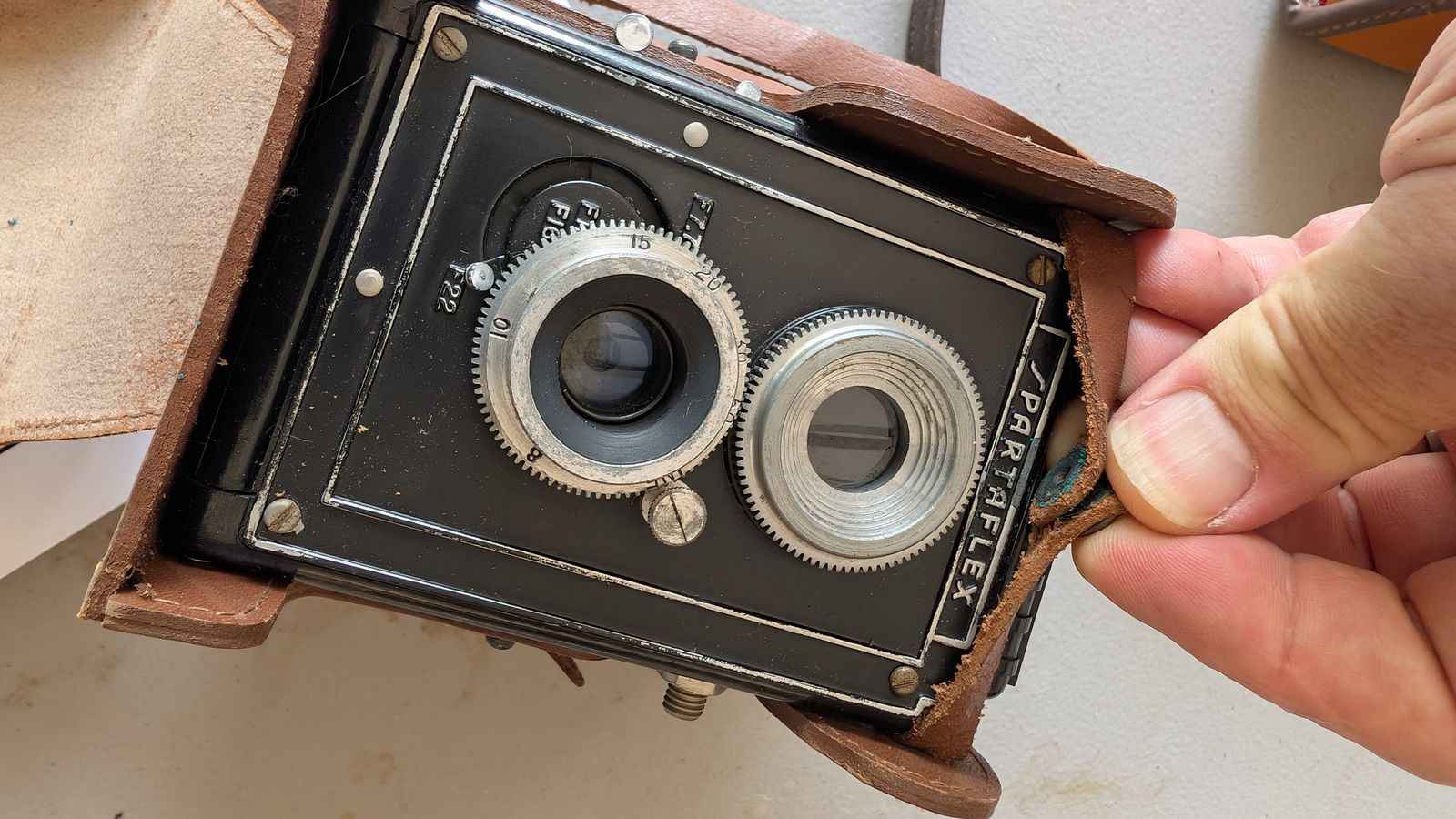
SPARTUS SPARTAFLEX TWIN-LENS REFLEX
• Made by Spartus Camera Corporation of Chicago, approximately 1940
• Uses 120 roll film, which is still widely available
• Produces twelve 2¼ x 2¼-inch, approximately 6 x 6 cm, negatives per roll
• 100mm taking lens
• Approximate aperture range of f/7.7 to f/22
• Approximate 1/60-second instant shutter plus time/bulb mode
• Focuses from approximately 5 feet to infinity
• Includes fitted leather carrying case
This is a genuine twin-lens reflex camera, not a decorative “pseudo-TLR.” The upper viewing lens and lower taking lens are geared together and focus as one. The connecting gear rings are visible in the photographs.
The Spartaflex was designed as an affordable American TLR and should not be confused with premium cameras such as the Rolleiflex. It is an interesting example of Chicago camera manufacturing from the period.
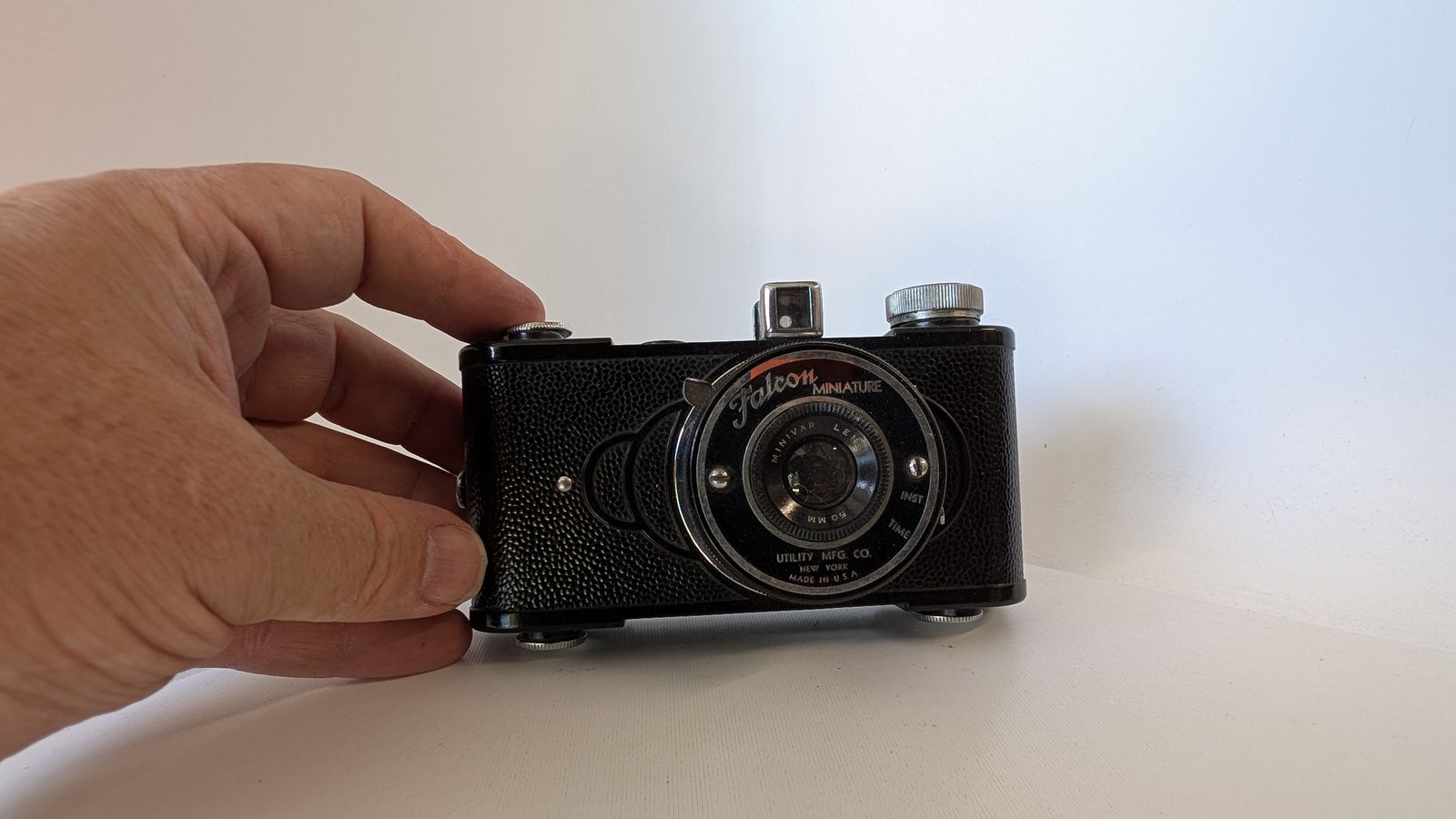
FALCON MINIATURE
• Made by Utility Manufacturing Company of New York, approximately 1938–1939
• Uses 127 roll film
• Produces sixteen images of approximately 3 x 4 cm per roll
• Minivar 50mm lens
• Fixed focus and fixed aperture
• INST shutter setting, approximately 1/25 second
• TIME setting for holding the shutter open
• Molded Bakelite body
Despite the name, the Falcon Miniature is not a spy camera, subminiature camera or 35mm camera. “Miniature” referred to its smaller half-frame image size on 127 film.
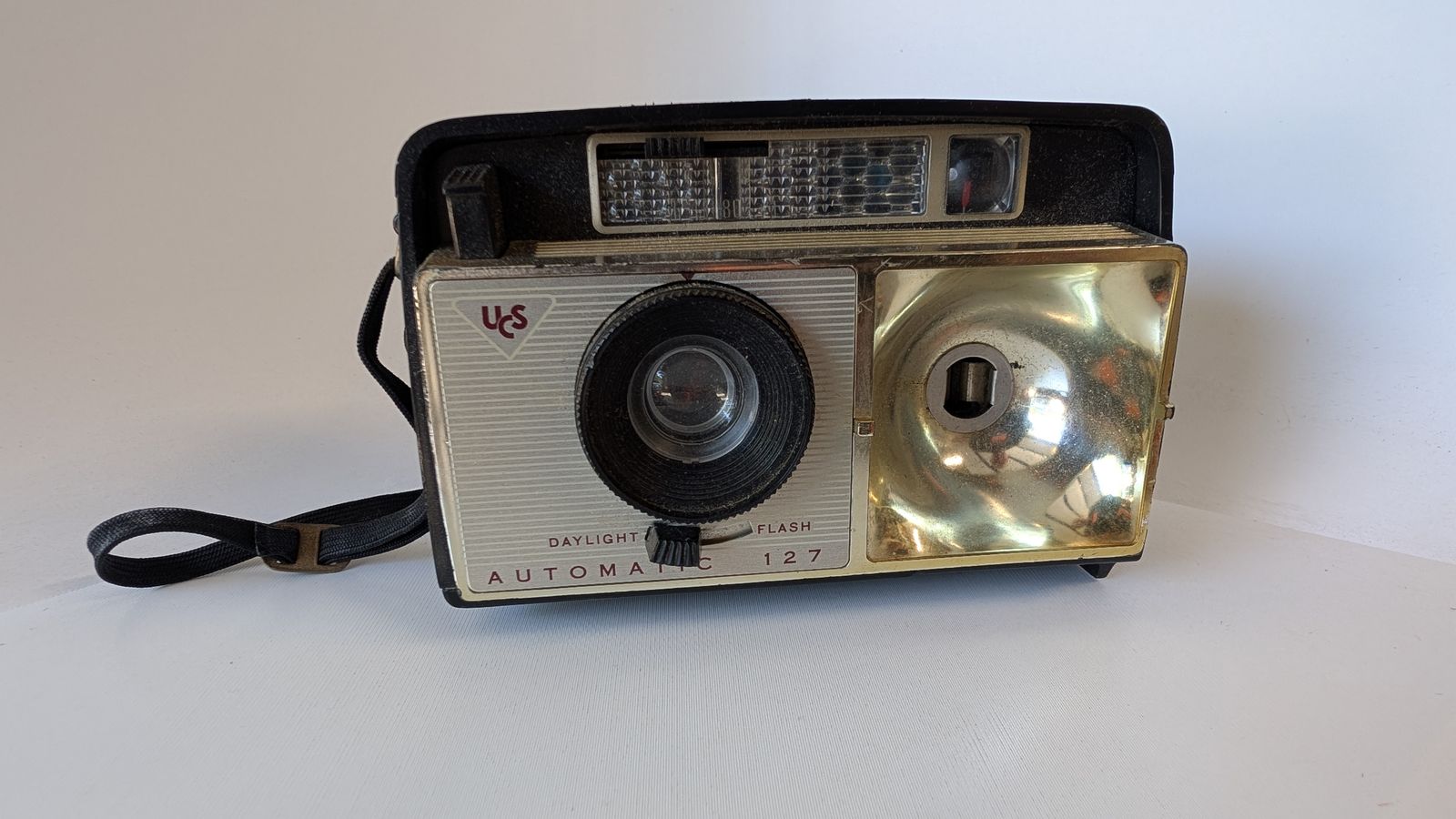
USC TRI-MATIC ELECTRIC EYE 127
• Uses 127 roll film
• Faceplate is marked “AUTOMATIC 127”
• Period selenium-cell automatic exposure system
• No battery was required for the original exposure system
“Electric Eye” was a period trade name for selenium-cell automatic exposure. Selenium cells frequently lose sensitivity with age, so no claim is being made that the automatic exposure system still operates.
TWO CAMERAS USE FILM THAT IS STILL MADE
The Argus Model A uses standard 35mm film, and the Spartus Spartaflex uses 120 roll film. Both formats remain in current production and are readily available. That gives this lot practical photographic value in addition to its display and collecting appeal.
INTERESTING MANUFACTURING CONNECTION
Utility Manufacturing later became associated with Spartus. That gives the Falcon Miniature and Spartus Spartaflex a shared corporate lineage, despite being made in different cities around a year apart. For collectors of early American cameras, this pairing is one of the most interesting parts of the lot.
CONDITION
These are vintage cameras offered as collectible items only. Shutter speeds, exposure systems, and other mechanical functions are historical specifications unless specifically demonstrated in the photographs or listing. No guarantee is made regarding the current operating condition. (L-033)
KSL Classifieds makes it easy to buy and sell with peace of mind. Check our safety tips and quickly report anything that doesn’t look right to keep your experience smooth and secure.


7 Hours
10
0
$60.00
Note: KSL, its service providers, and the seller receive data from this message. See our Privacy Notice and TOU for details.
KSL Classifieds makes it easy to buy and sell with peace of mind. Check our safety tips and quickly report anything that doesn’t look right to keep your experience smooth and secure.


LOT OF FOUR VINTAGE CAMERAS — APPROX. 1936 TO POST-WAR ERA
Four early cameras, all identified and matched to the inventory numbers shown in the photographs. Three are American-made, and two share the same corporate lineage.
CAMERAS INCLUDED:
ARGUS MODEL A
• Made in Ann Arbor, Michigan, approximately 1936–1941
• Standard 35mm film, which is still widely available
• I.R.C. 50mm f/4.5 Anastigmat lens
• Molded Bakelite body with removable Art Deco-style back
• Two-position pop-out focusing lens
• Shutter originally specified at 1/25, 1/50, 1/100 and 1/200, plus B and T
This is the original Argus Model A, not the similar A2B or Argus AF. The A2B has an extinction exposure meter, which this camera does not have. The AF uses continuous helical focusing, while this camera has the Model A’s simpler two-position lens.
The Argus Model A helped make affordable 35mm photography popular in the United States. It originally sold for about $12.50 when most 35mm cameras were expensive imports.
SPARTUS SPARTAFLEX TWIN-LENS REFLEX
• Made by Spartus Camera Corporation of Chicago, approximately 1940
• Uses 120 roll film, which is still widely available
• Produces twelve 2¼ x 2¼-inch, approximately 6 x 6 cm, negatives per roll
• 100mm taking lens
• Approximate aperture range of f/7.7 to f/22
• Approximate 1/60-second instant shutter plus time/bulb mode
• Focuses from approximately 5 feet to infinity
• Includes fitted leather carrying case
This is a genuine twin-lens reflex camera, not a decorative “pseudo-TLR.” The upper viewing lens and lower taking lens are geared together and focus as one. The connecting gear rings are visible in the photographs.
The Spartaflex was designed as an affordable American TLR and should not be confused with premium cameras such as the Rolleiflex. It is an interesting example of Chicago camera manufacturing from the period.
FALCON MINIATURE
• Made by Utility Manufacturing Company of New York, approximately 1938–1939
• Uses 127 roll film
• Produces sixteen images of approximately 3 x 4 cm per roll
• Minivar 50mm lens
• Fixed focus and fixed aperture
• INST shutter setting, approximately 1/25 second
• TIME setting for holding the shutter open
• Molded Bakelite body
Despite the name, the Falcon Miniature is not a spy camera, subminiature camera or 35mm camera. “Miniature” referred to its smaller half-frame image size on 127 film.
USC TRI-MATIC ELECTRIC EYE 127
• Uses 127 roll film
• Faceplate is marked “AUTOMATIC 127”
• Period selenium-cell automatic exposure system
• No battery was required for the original exposure system
“Electric Eye” was a period trade name for selenium-cell automatic exposure. Selenium cells frequently lose sensitivity with age, so no claim is being made that the automatic exposure system still operates.
TWO CAMERAS USE FILM THAT IS STILL MADE
The Argus Model A uses standard 35mm film, and the Spartus Spartaflex uses 120 roll film. Both formats remain in current production and are readily available. That gives this lot practical photographic value in addition to its display and collecting appeal.
INTERESTING MANUFACTURING CONNECTION
Utility Manufacturing later became associated with Spartus. That gives the Falcon Miniature and Spartus Spartaflex a shared corporate lineage, despite being made in different cities around a year apart. For collectors of early American cameras, this pairing is one of the most interesting parts of the lot.
CONDITION
These are vintage cameras offered as collectible items only. Shutter speeds, exposure systems, and other mechanical functions are historical specifications unless specifically demonstrated in the photographs or listing. No guarantee is made regarding the current operating condition. (L-033)