Pets
Few things in this world are more adorable than a brand-new, cuddly puppy. There’s just something about their fuzzy muzzles and floppy ears that can warm the coldest of hearts. Rubbing their furry little bellies even releases oxytocin, that feel-good hormone humans can’t get enough of.
Since the demand for these lovable, tiny animals is high, some breeders are eager to pocket as much cash as possible from their pups. Irresponsible breeding tactics used by puppy mills and backyard breeders lead to the abuse of millions of animals each year. Sadly, you may support them without realizing it.
Want a closer look at what’s happening in Utah? Read a rescue volunteer’s thoughts on the issue.
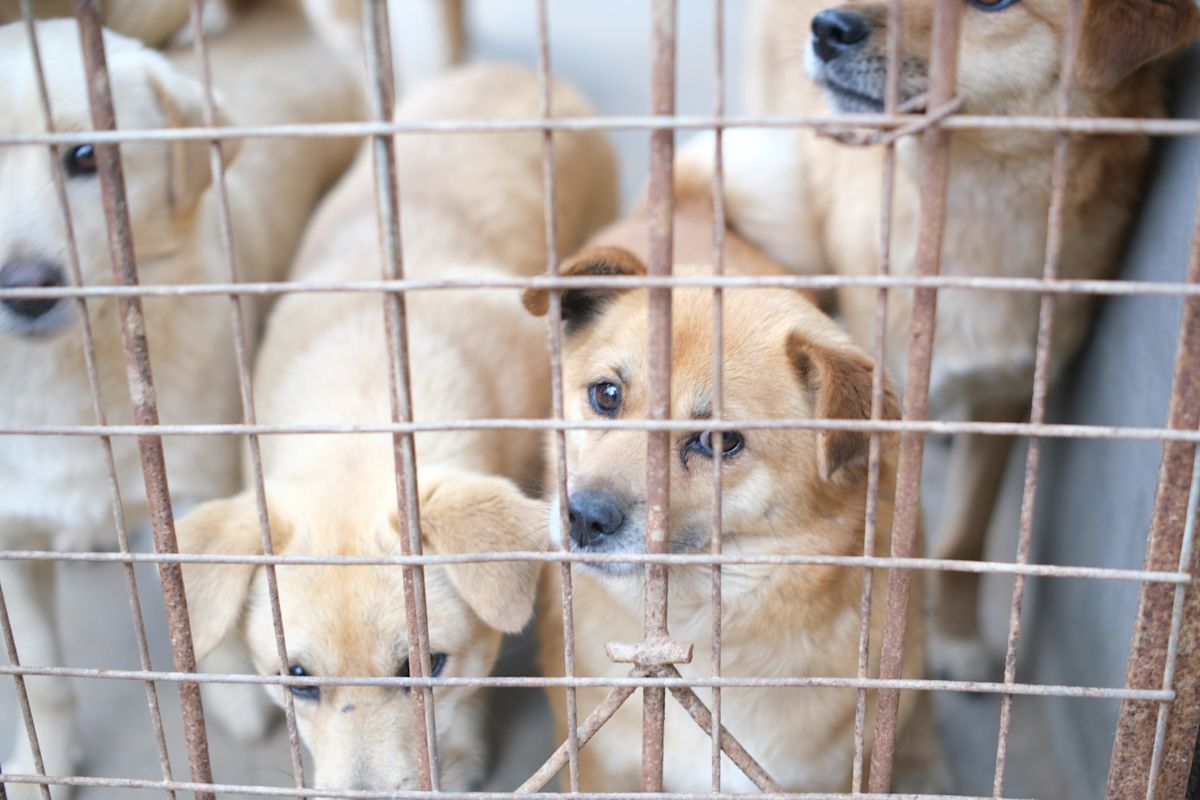
Puppy mills (aka puppy farms) are places where people breed dogs as quickly as possible without regard for the animals’ health and well-being. In these types of operations, profit is the priority, so animals are usually forced to breed until the end of their lives.
Since they exist for the sole purpose of breeding, dogs in a puppy mill are primarily kept in cages and deprived of necessary medical care. This lack of attention leads to a host of health concerns for the parents and their pups. In fact, many puppies from mills carry long-lasting physical and emotional scars.
The Humane Society of the United States estimates there are approximately 10,000 active puppy mills in the country that sell 2.6 million puppies each year. Since most of them don’t want the public to witness the condition of their facilities, these puppies usually wind up in pet stores or on the internet.
At the time of this writing, yes — puppy mills are (shockingly) legal. You may wonder how that’s possible, given the dangers they pose. According to HSUS, “In most states, a breeding kennel can legally keep dozens, even hundreds, of dogs in cages for their entire lives, as long as the dogs are given the basics of food, water and shelter.”
The good news is that hundreds of cities, counties and states throughout the country have taken action to ban the retail sale of puppies from mills, which is helping to put puppy mills out of business.
Use this chart as a quick guide to key differences between puppy mills and breeders before purchasing a new pet.
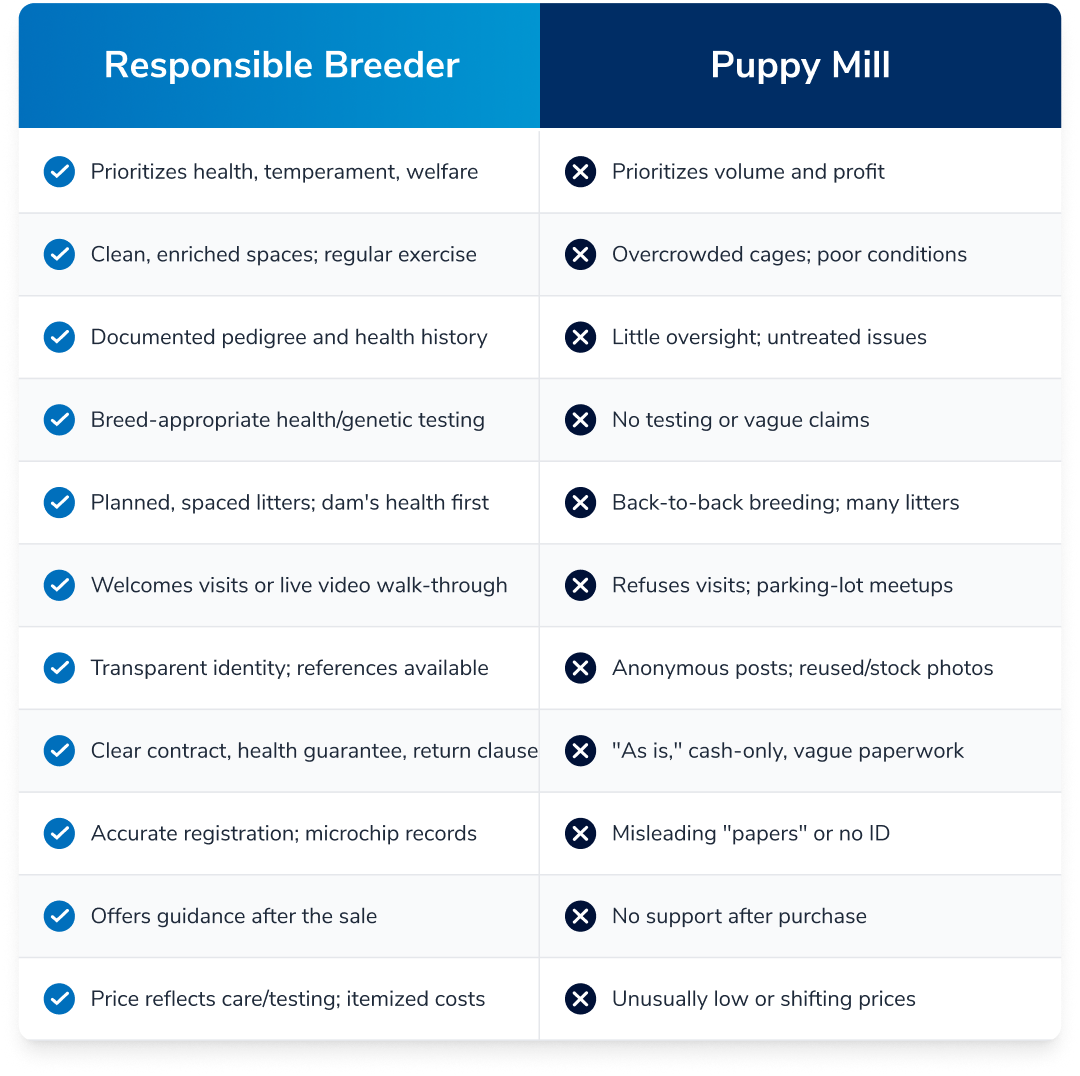
How do you know if you’re buying from a puppy mill or a responsible breeder? It can be a tricky thing to figure out. Many unsuspecting and well-meaning dog owners have unwittingly bought puppies that originated from puppy farms. To help you make wiser decisions in the future, here are a few key things to look for:
In-person visits. A good breeder will happily invite you to their facility and ask a lot of questions. Since they genuinely care about dogs over profit, they’ll want to make sure their pups are going to a good home. The last thing puppy mills want is for you to see all those poor caged dogs in person.
Waiting lists. They may be inconvenient, but these are typically a good sign. A waiting list indicates that the breeder limits the number of litters their dogs have in a year.
Veterinary care. If the breeder can provide proof that the puppies have been seen or vaccinated by a veterinarian before they go home with you, then you know they’ve been in good hands.
Ability to answer questions. Because of the time and money required to properly breed animals, breeders should be experts on the dogs you’re buying from them. Ask them about the breed’s temperament, nutritional needs, lifespan and any other information you can think of. If they seem unsure or annoyed by your questions, beware!
References. A breeder with nothing to hide will gladly give you the names of families who’ve purchased from them before, as well as the vet who cares for their animals.
Finding a responsible breeder may take a little extra effort (and possibly more money on the front end), but the long-term benefits are well worth it.
There’s one more red flag you should be aware of when purchasing puppies online. Sometimes owners will list dogs looking for “guardian homes,” which means you can buy the puppy at a discount — provided the seller retains the right to breed it. The idea seems attractive because you get a purebred puppy for little or no money, but the dog isn’t truly “yours.” The breeder can take it back at any time. Beware any seller whose main concern is breeding and not the dog’s welfare.
While you might not be able to single-handedly shut down these operations, you can put a stop to the animal abuse in puppy mills and backyard breeders in several ways.
Follow the guidelines above for identifying the differences between a puppy mill and a responsible breeder.
Follow the guidelines above for identifying the differences between a puppy mill and a responsible breeder.
Contact your local representatives or join a local effort to pass a humane pet sales ordinance.
Avoid purchasing puppies from pet stores and encourage pet stores to take action against puppy mill sales.
Adopt instead of shop.
Raise awareness of the situation to prevent others from unknowingly supporting puppy mills and backyard breeders.
Armed with the information above, you now have all the necessary tools to make responsible decisions when it comes to purchasing puppies — but adopting a dog is a decision you’ll never regret.
With KSL’s initiative to protect pets online and commitment to safer listings, you can browse our listings with added confidence. There are plenty of furry friends waiting for a loving home just like yours. Adopt your next pet on KSL Classifieds.